
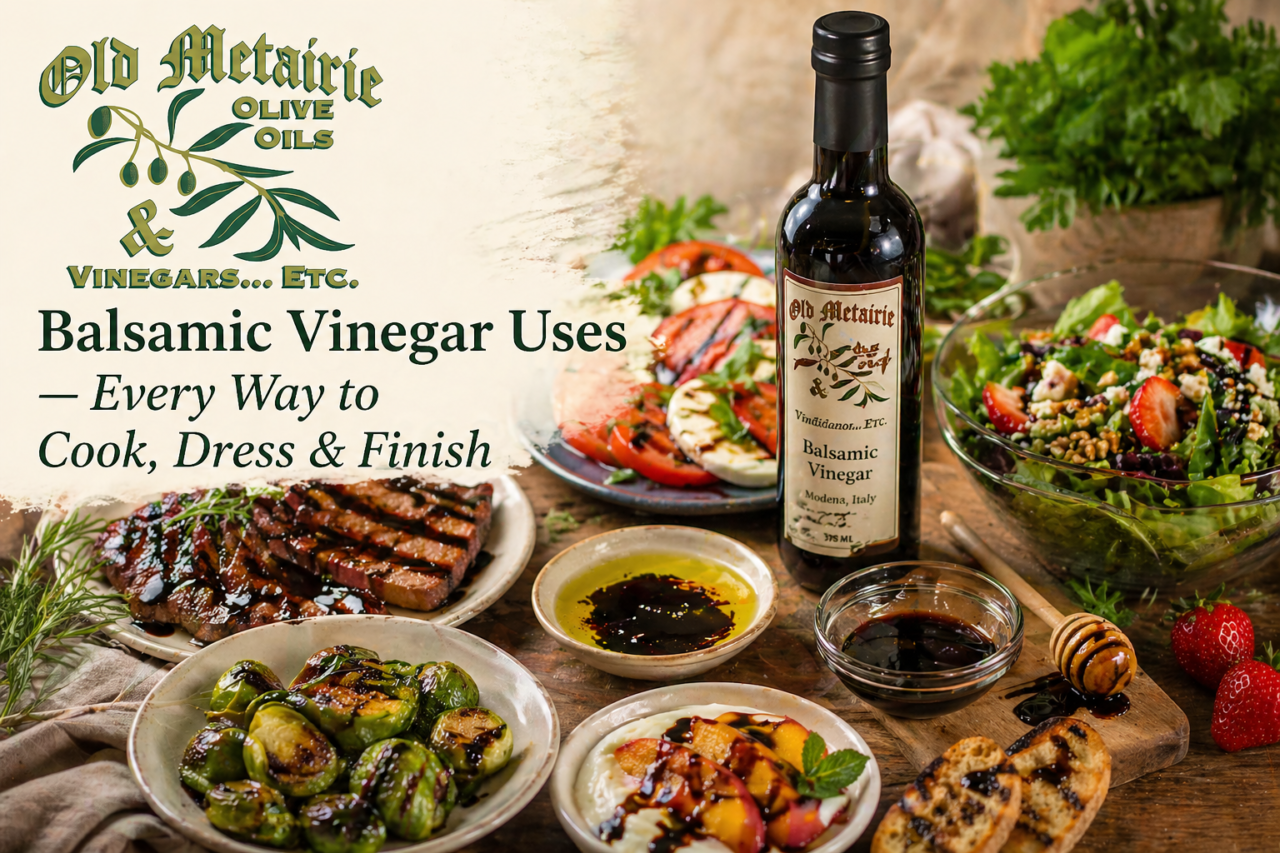
Balsamic vinegar uses are far more interesting than most people realize — and far more varied than the bottle gathering dust in the back of your pantry might suggest. If you’ve mostly used it for salad dressing and stopped there, you’re getting about 20% of what a good aged balsamic can do.
This is a complete guide to every real balsamic vinegar use: savory cooking, finishing, glazes, marinades, and desserts. We’ll also explain why quality matters for each application — because a thick, aged barrel balsamic and a thin grocery-store product simply don’t behave the same way.
What makes balsamic vinegar different from other vinegars
Before getting into the uses, it helps to understand what balsamic actually is — because most people don’t know, and it changes how you cook with it.
Traditional balsamic vinegar starts as grape must: freshly crushed grape juice with the skins, seeds, and stems. That must is cooked down, then aged in a succession of wooden barrels — oak, cherry, chestnut, mulberry. The aging can last anywhere from a few years to several decades. The aging process concentrates the sugars, deepens the flavor, and develops the thick, syrupy texture that distinguishes a quality aged balsamic from the watery, sharp stuff most supermarkets sell.
The result is something that is simultaneously sweet, tart, rich, and complex — a flavor you can’t replicate with any other ingredient. A good aged balsamic from Modena or Reggio Emilia has notes of dried fruit, caramel, wood, and a long, warming finish.
At Old Metairie, our balsamic vinegars come through Veronica Foods and are aged in traditional wooden barrels, some for up to 18 years. That aging is what makes them genuinely useful across all the categories below — not just one or two.
Balsamic vinegar uses in salads and dressings
This is where most people start, and for good reason — balsamic is exceptional in salad dressings. In fact, a well-made balsamic vinaigrette is one of the most useful things you can have in your kitchen.
Classic balsamic vinaigrette The ratio: roughly 3 parts olive oil to 1 part balsamic, a small amount of Dijon mustard, salt, and pepper. Shake or whisk to emulsify. A drizzle of honey balances a sharper balsamic. This is the foundation that every other variation builds on.
Drizzled directly over greens A thick aged balsamic can be drizzled straight over a salad without any oil at all — particularly on bitter greens like arugula, radicchio, or endive. The sweetness of the balsamic counterbalances the bitterness beautifully.
Raw applications and salads
Caprese salad Fresh mozzarella, ripe tomatoes, fresh basil, cold-pressed olive oil, and a finishing drizzle of aged balsamic. This is one of the best arguments for quality ingredients: a thin, sharp balsamic turns it acidic. A thick, aged one makes it taste like summer.
Strawberry salad Sliced strawberries, arugula, shaved Parmesan, toasted walnuts, and balsamic dressing. One of the best combinations in the book, and a good introduction to using balsamic with fruit — which comes up several more times below.
Balsamic vinegar uses in cooking and savory dishes
Sautéed and roasted vegetables
Balsamic is outstanding with roasted vegetables — particularly root vegetables. First, toss carrots, beets, sweet potatoes, or Brussels sprouts with olive oil and a splash of balsamic. Then roast at 400°F. The sugars in the balsamic caramelize against the high heat and develop a deep, complex crust on the vegetables.
For sautéed vegetables — mushrooms, onions, zucchini — add a tablespoon of balsamic in the last two minutes of cooking. It reduces quickly and glazes the vegetables with a sweet-savory coating that elevates the whole dish.
Glazes, marinades, and pan sauces
Balsamic glaze
One of the most versatile preparations you can make. Simply combine equal parts balsamic vinegar and honey in a small saucepan. Bring to a simmer, then reduce by half until it coats the back of a spoon. The result is thick, intensely flavored, and works on almost everything: grilled chicken, pork tenderloin, salmon, roasted cauliflower, pizza, flatbreads.
A high-quality aged balsamic reduces into a glaze faster and with better flavor than a thin grocery-store product — less cooking time, more depth.
Marinades for meat and poultry
Balsamic vinegar is an excellent marinade base for chicken, pork, and beef. The acidity tenderizes the meat. The natural sugars help develop color and crust during cooking. For a simple marinade, combine balsamic, olive oil, garlic, fresh rosemary, salt, and pepper. Marinate chicken thighs for 2–4 hours before grilling.
Pan sauces
After searing chicken or pork, deglaze the pan with a splash of balsamic and a little chicken stock. Scrape up the fond, reduce for two minutes, finish with a knob of butter. It takes a basic weeknight dinner into something that tastes considerably more deliberate.
Balsamic onions
Slow-cook sliced onions in olive oil over low heat for 30–40 minutes until deeply caramelized. Then add two tablespoons of balsamic and cook for another 5 minutes. The result is one of the best things you can put on a burger, a flatbread, a crostini, or alongside a grilled steak.
Bruschetta and crostini
Tomato bruschetta gets significantly better with a finishing drizzle of aged balsamic just before serving. The acidity brightens the tomatoes and the sweetness rounds out the raw garlic. Don’t skip it.
Balsamic vinegar uses as a finishing drizzle
This category deserves its own section, because it’s where the quality of the balsamic is most immediately obvious — and most often underused. As a result, most people never get the full value from a bottle they paid good money for.
A finishing drizzle means adding balsamic at the very end, after cooking, just before serving. No heat. No reduction. Just the balsamic itself doing the work.
Grilled meats
A few drops of aged balsamic over a sliced grilled steak, lamb chops, or duck breast adds a brightness that cuts through the fat and pulls all the flavors together.
Soup
A thin drizzle of balsamic over tomato soup, lentil soup, or butternut squash soup right before serving adds a layer of complexity that’s hard to identify but impossible to miss once you start doing it.
Less obvious but worth trying
Eggs
Fried or poached eggs with a drizzle of balsamic sounds unusual at first. In practice, it tastes immediately right. The richness of the egg yolk and the sweet-acid of the balsamic work together in the same way a good hollandaise does, but with far less effort.
Pizza and flatbreads
Drizzle over a finished pizza — particularly one with prosciutto, arugula, or fig — right before serving. The heat of the pizza warms the balsamic just slightly and opens up its aromatics.
Cheese
Aged balsamic is a classic pairing with Parmigiano-Reggiano, aged pecorino, and sharp cheddars. The sweetness plays against the salt and funk of the aged cheese, and both are better for it. This is also an excellent, effortless appetizer with nothing else required.
Balsamic vinegar uses in desserts
This is where people are most skeptical — and most surprised. Nevertheless, balsamic vinegar genuinely belongs in desserts, not in large quantities, but as a finishing accent that adds depth you can’t get any other way.
Strawberries with balsamic
First, slice ripe strawberries and toss with a small amount of aged balsamic and a pinch of black pepper. Let them macerate for 20–30 minutes — the balsamic draws out the juices and creates a natural syrupy sauce. Serve with fresh whipped cream or vanilla ice cream. This is one of the best desserts you can make with three ingredients.
Sweet applications
Vanilla ice cream
A drizzle of thick aged balsamic directly over a scoop of good vanilla ice cream. The combination of warm caramel notes from the balsamic against cold, rich cream is something most people try once and never forget. The key is a quality aged balsamic — a thin, sharp one won’t work here.
Peaches and stone fruit
Grilled or roasted peaches, nectarines, or figs with a finishing drizzle of balsamic and a scoop of mascarpone or crème fraîche. A summer dessert that takes five minutes and tastes like it didn’t.
Chocolate
Dark chocolate and aged balsamic have a well-documented affinity — chefs have used this pairing for years. A drizzle over a chocolate tart, brownies, or a chocolate panna cotta adds a tangy brightness that keeps the richness of the chocolate from becoming heavy.
Balsamic reduction over panna cotta
A simple panna cotta finished with a balsamic reduction — reduced with a little sugar and a vanilla bean — is one of the most elegant desserts in Italian cooking and one of the easiest to reproduce at home.
White and rosé balsamic — the lighter alternative
Most of what’s described above works equally well with white or rosé balsamic vinegars. However, these have a lighter, fruitier, less assertive flavor than traditional dark balsamic — which makes them better suited for certain applications.
White balsamic is ideal when you don’t want to add color to a dish. Use it in light-colored dressings, pale sauces, fish, chicken, and lighter desserts like panna cotta or fresh fruit. It has the same sweet-tart complexity as dark balsamic without the visual impact.
Our rosé and white balsamic options also include fruit-infused varieties — think Cranberry Pear, Black Mission Fig, Peach — which open up another range of uses in both cooking and cocktails.
Matching the balsamic to the use
Not every balsamic works equally well for every application. As a result, choosing the right one matters. Here’s a quick guide:
Thick, aged balsamic (12–18 years): Best for finishing drizzles, desserts, and cheese pairings. This is where the full complexity and natural sweetness of a long-aged balsamic earns its place. Don’t cook it — serve it.
Medium-aged balsamic (6–12 years): The most versatile. Works beautifully in dressings, glazes, marinades, and most cooking applications. This is the everyday workhorse.
Younger, thinner balsamic: Better for high-heat cooking where some of the flavor will cook off anyway — roasting, high-heat glazing, marinades for grilling. Less suitable for raw applications where the sharpness will dominate.
When in doubt, stop in and taste before you buy. We’ll match you to the right one based on how you actually cook.
FAQS
What are the uses of balsamic vinegar?
Balsamic vinegar uses are in salad dressings, as a finishing drizzle over meats and vegetables, in glazes and reductions, in marinades, as a dessert topping over strawberries or vanilla ice cream, and as a pairing with aged cheeses. Aged balsamic vinegar is particularly versatile and works across both savory and sweet applications.
How do you use balsamic vinegar in cooking?
In cooking, balsamic vinegar works well as a marinade base for chicken and pork, added to roasting vegetables in the last few minutes, reduced into a glaze with honey, used to deglaze a pan after searing meat, and stirred into caramelized onions. The sugars in balsamic caramelize under heat, which adds depth and color to cooked dishes.
Can you use balsamic vinegar in desserts?
Yes. Balsamic vinegar is excellent in desserts. Classic uses include macerating strawberries with a drizzle of aged balsamic, finishing vanilla ice cream with a balsamic drizzle, pairing with grilled peaches or figs, and drizzling over dark chocolate desserts. A thick, aged balsamic works best for sweet applications.
What is the difference between dark and white balsamic vinegar?
Dark balsamic vinegar is made from cooked grape must aged in wooden barrels, producing a thick, sweet, deeply flavored vinegar. White balsamic is made from white Trebbiano grapes and aged for a shorter period, producing a lighter, more delicate flavor without dark color. White balsamic is ideal for light-colored dishes, fish, and applications where dark balsamic would overpower or discolor the food.
How do you make a balsamic glaze?
To make a balsamic glaze, combine equal parts balsamic vinegar and honey in a small saucepan. Bring to a simmer over medium heat and reduce by half, stirring occasionally, until the mixture coats the back of a spoon — about 10–15 minutes. Use warm or let cool to thicken further. Works well drizzled over grilled meats, roasted vegetables, pizza, and desserts.
A note on quality
Ultimately, the single biggest factor in whether any of the above works is the quality of the balsamic you’re using. A thin, sharp, mass-produced balsamic vinegar — the kind that costs $4 at the grocery store — is made from wine vinegar with caramel color and thickeners added. It doesn’t age in barrels. The natural sweetness that comes from reduced grape must never develops. And in the kitchen, it simply won’t behave the same way as the real thing.
The balsamics we carry at Old Metairie are genuine aged barrel balsamics from Veronica Foods — the real thing, tested and sourced from traditional producers. The flavor difference is immediately obvious when you taste them side by side, and it’s the difference between a condiment you use occasionally and one you reach for every time you cook.
