
“`html
Important health note: Olive oil is food, not medicine. It cannot diagnose, treat or cure a medical condition. People managing allergies, digestive disorders, diabetes, cardiovascular conditions or prescription medications should discuss major dietary changes with a qualified healthcare professional.
What Is an Olive Oil Wellness Routine?
An olive oil wellness routine is simply a repeatable way to use extra virgin olive oil within balanced meals. The goal is not to add unlimited oil to everything. Instead, use a reasonable amount to replace less nutritious fats, prepare vegetables and create satisfying homemade food. For example, you might whisk olive oil into a dressing rather than buying one with added sugar. You could also toss vegetables with olive oil before roasting or finish a bowl of beans with a small drizzle for extra flavor. The U.S. Food and Drug Administration’s updated definition of “healthy” recognizes 100% olive oil as a food that can fit within a healthy dietary pattern. Nevertheless, portions still matter because all oils are calorie-dense. Therefore, the most useful approach is replacement—not simply adding more fat to an unchanged diet.A Better Question to Ask
Rather than asking, “How much olive oil can I add?” ask, “What less nutritious ingredient can this olive oil replace?” That simple shift keeps the focus on the complete meal.
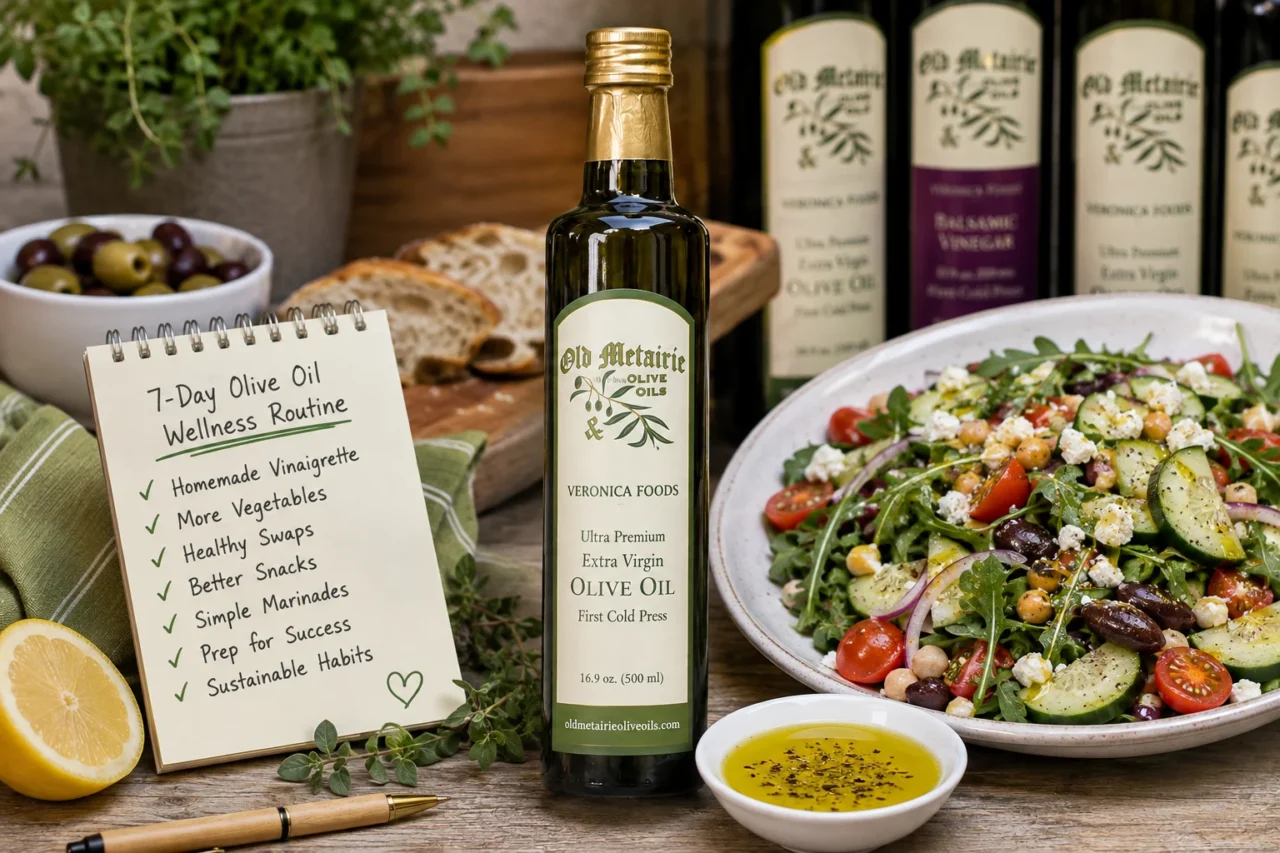
Your 7-Day DIY Olive Oil Wellness Routine
Day One
Make a Five-Minute House Vinaigrette
Homemade dressing is one of the easiest places to begin. It allows you to control the sweetness, salt and flavor while avoiding a partially used bottle that sits in the refrigerator for months.DIY Everyday Vinaigrette
Whisk together 3 tablespoons extra virgin olive oil, 1 tablespoon balsamic vinegar or fresh lemon juice, 1 teaspoon Dijon mustard, black pepper and a small pinch of salt. Store it in a covered container in the refrigerator and shake before using.
Try it over leafy greens, cucumbers, tomatoes, white beans or leftover roasted vegetables. Browse the store’s selection of premium balsamic vinegars to create different flavor combinations.
Day Two
Replace Butter in One Savory Meal
Today, choose one meal where olive oil can replace butter or another fat higher in saturated fat. For instance, drizzle olive oil over warm vegetables, use it when sautéing onions or finish a baked potato with olive oil, herbs and pepper.This type of replacement reflects the American Heart Association’s recommendation to choose foods containing unsaturated fats in place of sources of saturated fat. However, the overall meal still matters. Pair the swap with vegetables, beans, seafood, poultry or whole grains whenever possible.
Day Three
Prepare a Louisiana Summer Vegetable Tray
Chop zucchini, bell pepper, eggplant, red onion and cherry tomatoes. Next, toss them lightly with olive oil, black pepper and a salt-free herb blend. Roast the vegetables indoors, cook them on the grill or use a grill basket outside.Flavor trick: Use a robust extra virgin olive oil before cooking. Then, add a small amount of a fused lemon, rosemary or garlic olive oil after cooking for a brighter finish.
Leftovers can become tomorrow’s salad, pasta topping, grain bowl or omelet filling. As a result, one batch of vegetables can support several balanced meals.
Day Four
Build a No-Cook Mediterranean Lunch
Louisiana’s August heat can make a heavy lunch unappealing. Fortunately, a satisfying meal does not always require the stove.DIY No-Cook Bowl
Combine rinsed chickpeas, chopped cucumber, tomato, parsley, olives and a small amount of feta. Finish the bowl with extra virgin olive oil, lemon juice and black pepper. Serve it over leafy greens or with whole-grain pita.
Chickpeas contribute fiber and plant-based protein, while the vegetables add volume, color and texture. Meanwhile, the olive oil helps carry the flavors throughout the bowl.
Day Five
Create a Better Afternoon Snack
Instead of waiting until you are extremely hungry, prepare a snack that combines produce with protein or fiber. A balanced snack can be simple and still feel special. Try sliced tomatoes with olive oil and pepper, whole-grain toast topped with mashed white beans and olive oil, or vegetables served with homemade hummus. Another option is air-popped popcorn tossed with a small amount of flavored olive oil instead of melted butter.For popcorn, begin with less oil than you think you need. Toss well, taste and add more only when necessary. This technique distributes flavor without soaking the popcorn.
Day Six
Mix a Simple Seafood or Chicken Marinade
DIY Lemon-Herb Marinade
Combine 2 tablespoons olive oil, 1 tablespoon fresh lemon juice, minced garlic, oregano, black pepper and a small pinch of salt. Use it for chicken or firm seafood, keeping raw proteins refrigerated while they marinate.
For verified food-safety instructions, visit the USDA Food Safety and Inspection Service .
Day Seven
Set Up a Weekly Olive Oil Prep Station
Healthy habits become easier when the ingredients are visible and ready. Set aside a few minutes to wash produce, cook a whole grain, prepare a dressing and place your most-used olive oil where it is convenient but protected from heat and direct light. You can also label small containers for salad dressing, marinades and finishing oils. However, avoid storing olive oil beside the stove or in direct sunlight. Heat, oxygen and light can shorten its useful life and weaken its flavor.Need help selecting an oil for dressings, vegetables or finishing meals? Visit Old Metairie Olive Oils & Vinegars at 103 Focis Street for a free tasting.
Five DIY Olive Oil Tips That Make Healthy Meals Easier
1. Measure First
Pour olive oil into a spoon or small cup before adding it. This step makes portions easier to see and prevents accidental overpouring.
2. Finish for Flavor
A small finishing drizzle often provides more noticeable flavor than adding a large amount early in the cooking process.
3. Pair Oil With Acid
Lemon juice or balsamic vinegar brings contrast and brightness, so a dish may need less salt to taste satisfying.
4. Prep One Sauce
A versatile herb sauce can flavor vegetables, beans, fish, chicken and whole grains throughout the week.
5. Taste Before Buying
Choose an olive oil you genuinely enjoy. You are more likely to prepare vegetables and homemade meals when the flavor appeals to you.
How to Choose Olive Oil for a Wellness Routine
Start with extra virgin olive oil that tastes and smells fresh. Depending on the olive variety and harvest, it may taste grassy, fruity, peppery, bitter or slightly pungent. Those characteristics are not automatically flaws. In fact, bitterness and a peppery finish can occur naturally in fresh oils containing plant compounds called polyphenols. Look for harvest information, proper storage and transparent quality standards. Old Metairie Olive Oils & Vinegars carries chemistry-verified oils sourced through Veronica Foods. Customers can also taste the oils before choosing one. For additional details about freshness and production, read the store’s complete explanation of cold-pressed olive oil . You can also learn more about high-polyphenol olive oil .Strong, Mild or Flavored?
A robust extra virgin olive oil works well with beans, grilled meats and hearty vegetables. A milder oil may be better for seafood, fruit-forward salads and delicate dishes. Meanwhile, fused and infused oils make it easier to add citrus, herb or pepper flavor without preparing a complicated sauce.
Explore Extra Virgin Olive OilsCommon Olive Oil Wellness Mistakes
Treating Olive Oil Like a Supplement
Drinking a shot of olive oil is not required. In addition, it may cause digestive discomfort for some people. Olive oil is generally more useful as part of vegetables, beans, whole grains and other meals.Adding Oil Without Replacing Anything
Olive oil still contributes calories. Consequently, adding large amounts on top of an already calorie-dense diet may work against personal weight-management goals. Use it intentionally and adjust other ingredients when appropriate.Expecting One Ingredient to Fix an Entire Diet
Research on Mediterranean-style eating patterns includes much more than olive oil. These eating patterns typically emphasize vegetables, fruit, legumes, nuts, whole grains and other minimally processed foods. Therefore, olive oil works best as one component of a broader routine.Keeping Olive Oil Beside a Hot Stove
Convenience matters, but constant heat does not help freshness. Store the bottle tightly closed in a cool, dark cabinet away from the oven, stove and sunny windows.Frequently Asked Questions About Olive Oil and Healthy Habits
Is extra virgin olive oil healthy?
Extra virgin olive oil contains primarily unsaturated fat and can fit within a balanced eating pattern. The American Heart Association recommends replacing sources of saturated fat with foods containing monounsaturated and polyunsaturated fats. However, no single food guarantees better health.
How much olive oil should I use each day?
There is no universal amount that is appropriate for every person. Needs vary according to total calorie intake, health conditions, dietary pattern and personal goals. A registered dietitian or healthcare professional can offer individualized guidance.
Is it better to drink olive oil or eat it with food?
Olive oil does not need to be consumed as a shot. Using it in dressings, vegetables, beans and balanced meals is usually more practical and enjoyable. Drinking oil alone may also cause nausea or digestive discomfort for some individuals.
Can I cook with extra virgin olive oil?
Yes. Extra virgin olive oil can be used for many common home-cooking methods, including sautéing, baking and roasting. Avoid letting any cooking oil smoke heavily, and choose a cooking method suited to the food and temperature.
Does olive oil help with weight loss?
Olive oil is not a weight-loss treatment. Because it is calorie-dense, portions remain important. Nevertheless, it may be included in balanced meals containing vegetables, fiber and protein. Sustainable weight management depends on the complete dietary pattern, activity, sleep, medical factors and other individual needs.
What is the healthiest type of olive oil?
Extra virgin olive oil is the least refined common grade and retains naturally occurring flavor and plant compounds. Freshness, storage, harvest quality and personal use also matter. The best choice is a properly stored oil that tastes fresh and fits the dish you are preparing.
Where can I taste premium olive oil near New Orleans?
Old Metairie Olive Oils & Vinegars offers free tastings at 103 Focis Street in Metairie, Louisiana. No appointment is required during regular business hours. The store serves customers from Metairie, New Orleans, Kenner, Lakeview, Jefferson and communities throughout Southeast Louisiana.
Should I talk with my doctor before changing my diet?
Discuss significant dietary changes with a healthcare professional when you have a diagnosed condition, a food allergy, digestive symptoms, a prescribed therapeutic diet or questions about medication interactions.
Keep Exploring
More Ways to Enjoy Olive Oil and Balsamic
Find new recipes, explore flavor combinations and discover more products for salads, marinades, vegetables, seafood and everyday cooking.
Start With One Sustainable Change
A healthier routine does not have to begin with a complete kitchen overhaul. Start by making one vinaigrette, preparing one vegetable tray or replacing butter in one savory meal. Once that step feels natural, add another. Most importantly, choose changes that fit your schedule, budget and household. A routine that you can maintain is more valuable than a complicated plan that lasts only a few days. Old Metairie Olive Oils & Vinegars helps local cooks find oils they will actually enjoy using. Stop by the shop for a complimentary tasting, compare mild and robust oils, and ask for pairing suggestions based on the foods you prepare most often.Taste Before You Choose
Find an Olive Oil That Fits Your Kitchen
Visit Old Metairie Olive Oils & Vinegars at 103 Focis Street in Metairie for free tastings, cooking ideas and personalized pairing suggestions.
Trusted Health and Nutrition Resources
For additional evidence-based information, review the American Heart Association’s 2026 dietary guidance .
You can also read the American Heart Association’s explanation of dietary fats .
The FDA’s updated “healthy” food-labeling information explains how olive oil can fit into a healthy dietary pattern.
This content is provided for general educational purposes and is not medical or nutritional advice. Individual dietary needs vary. Consult an appropriate healthcare professional for recommendations based on your medical history and personal needs.
