
Metairie • New Orleans • Kenner • Southeast Louisiana
5 No-Cook Olive Oil Sauces for Louisiana Summer Meals
Make pesto, chimichurri, creamy lemon sauce, tomato relish, and a sweet-spicy balsamic drizzle without heating the kitchen.
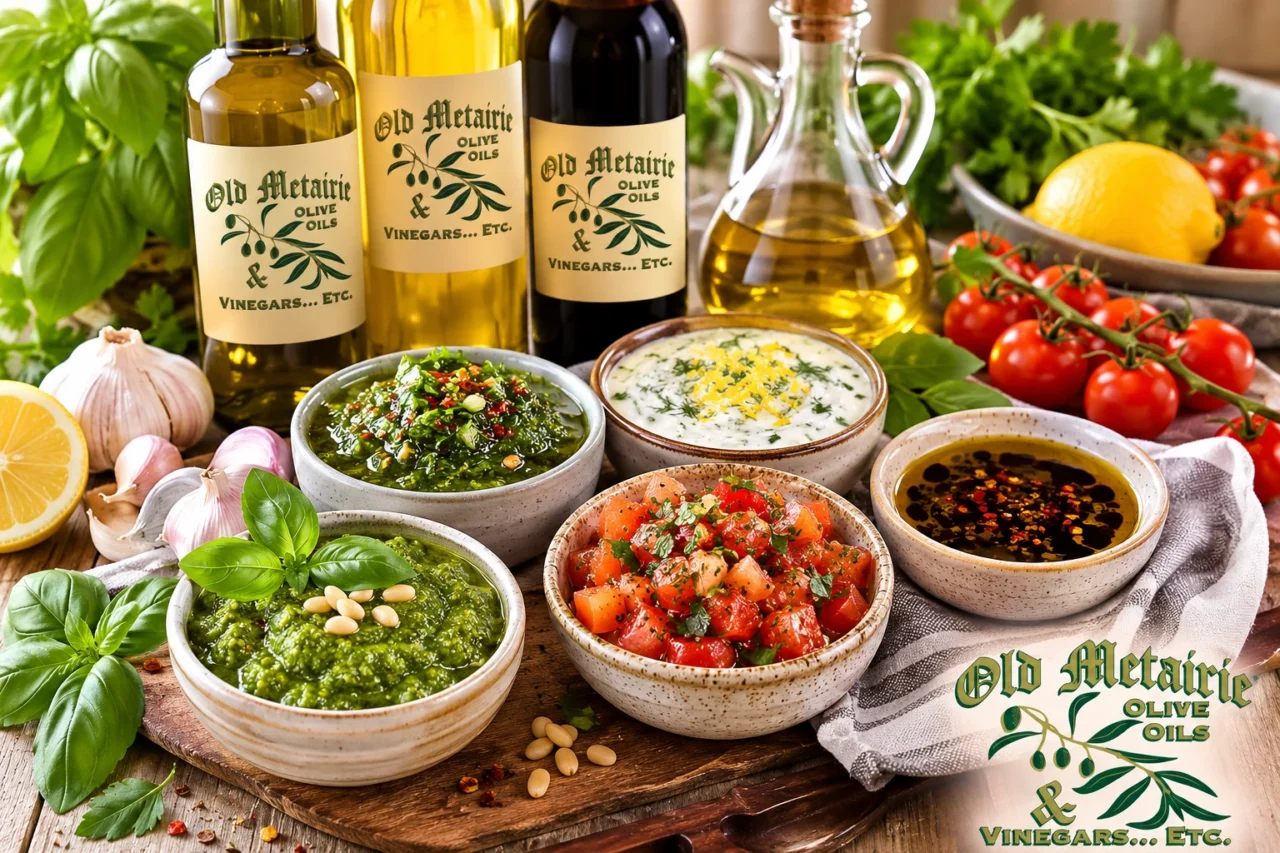
No-cook olive oil sauces make summer meals easier when Louisiana heat makes turning on the oven feel like too much work. With fresh herbs, premium olive oil, balsamic vinegar, citrus, garlic, and a few pantry ingredients, you can add restaurant-style flavor to shrimp, chicken, vegetables, sandwiches, pasta, seafood, and crusty bread.
Better yet, most of these sauces take less than ten minutes to prepare. Make one for tonight’s dinner, or prepare two different sauces and let everyone build a meal around their favorite flavor.
Quick Answer
What can you make with olive oil without cooking?
You can make basil pesto, chimichurri, lemon-herb sauce, fresh tomato relish, bread dipping oil, balsamic drizzle, marinades, sandwich spreads, and vinaigrettes without cooking. Start with quality extra virgin olive oil, add an acidic ingredient such as lemon juice or balsamic vinegar, and finish with herbs, garlic, spices, cheese, or fruit.
What You Will Find Below
Why No-Cook Olive Oil Sauces Work So Well in Summer
During late July and August, many Metairie-area families want meals that feel fresh but do not require a long evening beside the stove. No-cook sauces solve that problem because one small batch can flavor several different foods.
For example, spoon pesto over rotisserie chicken, toss it with cold pasta, or spread it onto a sandwich. Meanwhile, chimichurri can brighten grilled steak, leftover chicken, shrimp, roasted vegetables, or sliced tomatoes.
The olive oil matters because it carries the flavor of the herbs, garlic, citrus, and seasonings throughout the sauce. Therefore, fresh, flavorful oil can make a noticeable difference in a recipe that uses only a few ingredients.
Start With an Olive Oil You Enjoy
Choose a classic extra virgin olive oil, or save time by starting with a fused or infused oil that already contains citrus, herbs, garlic, peppers, or other flavors.
Sauce No. 1
Five-Minute Basil and Olive Oil Pesto
Traditional pesto is one of the easiest ways to use fresh summer basil. It works well with pasta, tomato sandwiches, mozzarella, chicken, shrimp, grilled vegetables, potatoes, and crusty bread.
Ingredients
- 2 packed cups fresh basil
- 1/2 cup extra virgin olive oil
- 1/3 cup Parmesan cheese
- 1/4 cup pecans, walnuts, or pine nuts
- 1 garlic clove
- 1 tablespoon lemon juice
- Salt and black pepper to taste
Directions
- Add the basil, cheese, nuts, garlic, and lemon juice to a food processor.
- Pulse until the ingredients are finely chopped.
- Slowly add the olive oil while blending.
- Taste, season, and add more oil if you prefer a thinner sauce.
Sauce No. 2
Fresh Louisiana-Style Chimichurri
Chimichurri is a fresh herb sauce that brings acidity, garlic, and mild heat to savory meals. Serve it with steak, chicken, pork, grilled shrimp, redfish, mushrooms, corn, roasted potatoes, or a vegetable platter.
Ingredients
- 1 cup finely chopped parsley
- 2 tablespoons chopped cilantro, optional
- 1/2 cup extra virgin olive oil
- 2 tablespoons red wine vinegar
- 2 garlic cloves, minced
- 1/2 teaspoon dried oregano
- Pinch of red pepper flakes
- Salt and black pepper to taste
Directions
- Combine the herbs, garlic, oregano, and red pepper flakes.
- Stir in the vinegar and olive oil.
- Season with salt and pepper.
- Let the mixture rest for 15 minutes so the flavors can blend.
Sauce No. 3
Creamy Lemon Olive Oil Sauce
This cool, creamy sauce works as a dip, sandwich spread, seafood topping, or dressing for a cold pasta bowl. It is especially useful when you want something richer than a vinaigrette but lighter than a heavy mayonnaise-based sauce.
Ingredients
- 3/4 cup plain Greek yogurt
- 2 tablespoons lemon olive oil or EVOO
- 1 tablespoon fresh lemon juice
- 1 teaspoon honey
- 1 tablespoon chopped dill or parsley
- 1 small garlic clove, grated
- Salt and black pepper to taste
Directions
- Whisk the yogurt, olive oil, lemon juice, and honey until smooth.
- Stir in the herbs and garlic.
- Add salt and pepper.
- Chill until you are ready to serve it.
Sauce No. 4
Fresh Tomato and Balsamic Relish
When summer tomatoes are juicy and flavorful, they do not need much help. This uncooked relish combines tomato, olive oil, balsamic vinegar, herbs, and garlic into a topping for bread, chicken, seafood, pasta, cheese, or salad greens.
Ingredients
- 2 cups diced ripe tomatoes
- 2 tablespoons extra virgin olive oil
- 1 tablespoon balsamic vinegar
- 2 tablespoons chopped basil
- 1 small garlic clove, minced
- Pinch of sea salt
- Black pepper to taste
Directions
- Place the diced tomatoes in a bowl.
- Add the olive oil, balsamic, basil, and garlic.
- Season lightly with salt and pepper.
- Let the relish rest for five to ten minutes before serving.
Sauce No. 5
Sweet-Heat Balsamic Drizzle
A sweet-spicy drizzle can wake up chicken, pork, grilled vegetables, pizza, flatbreads, cheese, roasted nuts, or even fresh watermelon. Because balsamic already brings sweetness and acidity, you only need a few additional ingredients.
Ingredients
- 3 tablespoons dark balsamic vinegar
- 1 tablespoon spicy fused olive oil
- 1 teaspoon honey, optional
- 1 teaspoon lime or lemon juice
- Small pinch of sea salt
Directions
- Whisk the balsamic and spicy olive oil together.
- Add honey only after tasting the mixture.
- Stir in the citrus juice and sea salt.
- Drizzle lightly over the finished dish.
DIY Formula for Creating Your Own No-Cook Sauce
Once you understand the basic balance, you can create a sauce from ingredients already in your refrigerator or pantry.
Choose the Oil
Use extra virgin, citrus, herb, garlic, or spicy olive oil.
Add Acidity
Try lemon, lime, wine vinegar, or balsamic vinegar.
Build Flavor
Add herbs, garlic, shallot, mustard, cheese, nuts, or fruit.
Finish and Taste
Balance the sauce with sea salt, pepper, honey, or heat.
DIY Tips and Tricks for Better Olive Oil Sauces
Taste Before Adding Honey
Fruit-flavored and aged balsamics may already provide enough sweetness.
Dry Herbs After Washing
Excess water can make pesto and herb sauces thin or watery.
Begin With Less Garlic
Raw garlic becomes stronger as a sauce rests. You can always add more.
Thin the Sauce Slowly
Add olive oil one tablespoon at a time until the texture feels right.
Use Citrus Zest
Lemon, lime, or orange zest adds aroma without making the sauce too acidic.
Label Your Containers
Write the sauce name and preparation date on the container before refrigerating it.
Easy Summer Meal Ideas Using These Sauces
You do not need to prepare an elaborate dinner. Instead, combine a prepared protein, fresh produce, bread, pasta, or cheese with one of the sauces above.
Louisiana Summer Food Safety Reminder
Wash fresh produce and herbs under running water before preparing them. In addition, refrigerate sauces containing dairy products, cheese, cut tomatoes, fresh herbs, garlic, or other perishable ingredients.
According to the USDA, perishable food should not remain at room temperature for more than two hours. When the temperature is above 90°F, that limit drops to one hour.
Need Pairing Help?
Find an Olive Oil and Balsamic Combination You Love
Explore recommended combinations online, or visit Old Metairie Olive Oils & Vinegars at 103 Focis Street for a free tasting during regular store hours.
Frequently Asked Questions
Questions About No-Cook Olive Oil Sauces
What is the easiest no-cook olive oil sauce?
A basic dipping sauce is the easiest option. Combine three tablespoons of extra virgin olive oil with one tablespoon of balsamic vinegar, then add sea salt, black pepper, and dried herbs.
Can I use infused olive oil in pesto?
Yes. Basil, garlic, lemon, rosemary, or Tuscan herb olive oil can add extra flavor to pesto. You can use only the flavored oil or blend it with a traditional extra virgin olive oil.
What is the difference between pesto and chimichurri?
Pesto commonly contains basil, olive oil, cheese, garlic, and nuts. Chimichurri usually contains parsley, olive oil, vinegar, garlic, oregano, and pepper. Pesto is richer, while chimichurri tastes brighter and more acidic.
Which balsamic vinegar is best for fresh tomatoes?
Traditional dark balsamic gives tomatoes a richer and slightly sweeter flavor. White or rosé balsamic provides a lighter finish and does not darken the bright color of the tomatoes.
How do I keep an olive oil sauce from tasting too acidic?
Add more olive oil gradually. You can also balance excess acidity with a small amount of honey, finely grated cheese, yogurt, or mashed fruit, depending on the recipe.
Can these sauces be used as marinades?
Chimichurri, pesto, balsamic sauce, and lemon-herb sauce can all flavor chicken, pork, seafood, or vegetables. However, discard any sauce that has come into contact with raw meat unless it is cooked thoroughly before serving.
Where can I taste olive oil and balsamic vinegar in Metairie?
Visit Old Metairie Olive Oils & Vinegars at 103 Focis Street in Metairie, Louisiana. Free tastings are available during regular store hours, and no appointment is required.
More Ways to Explore Olive Oil and Balsamic
Fused vs. Infused Oils
Learn how the two flavoring methods differ.
Oil and Vinegar Pairings
Find combinations for salads, cooking, dipping, and desserts.
Aged Balsamic Vinegar
Compare dark, white, and rosé balsamic varieties.
More Recipes and Tips
Explore seasonal recipes, pairings, and olive oil education.
Build Your Summer Sauce Collection
Shop online or stop by the Old Metairie store to taste olive oils and balsamic vinegars before choosing the flavors for your next sauce, marinade, dip, or summer meal.
