
Metairie • New Orleans • Kenner • Southeast Louisiana
How to Use Balsamic Vinegar on Summer Fruit: 7 Easy Louisiana Pairings
Balsamic vinegar on summer fruit creates an easy sweet-and-tangy dish for cookouts, brunches, desserts, mocktails, and relaxed evenings at home.
Quick answer: Pair balsamic vinegar with naturally sweet summer fruit such as peaches, watermelon, strawberries, blueberries, cherries, or figs. Start with one or two teaspoons, toss gently, and let the fruit rest for five to ten minutes. The vinegar brightens the fruit without making it taste sour.
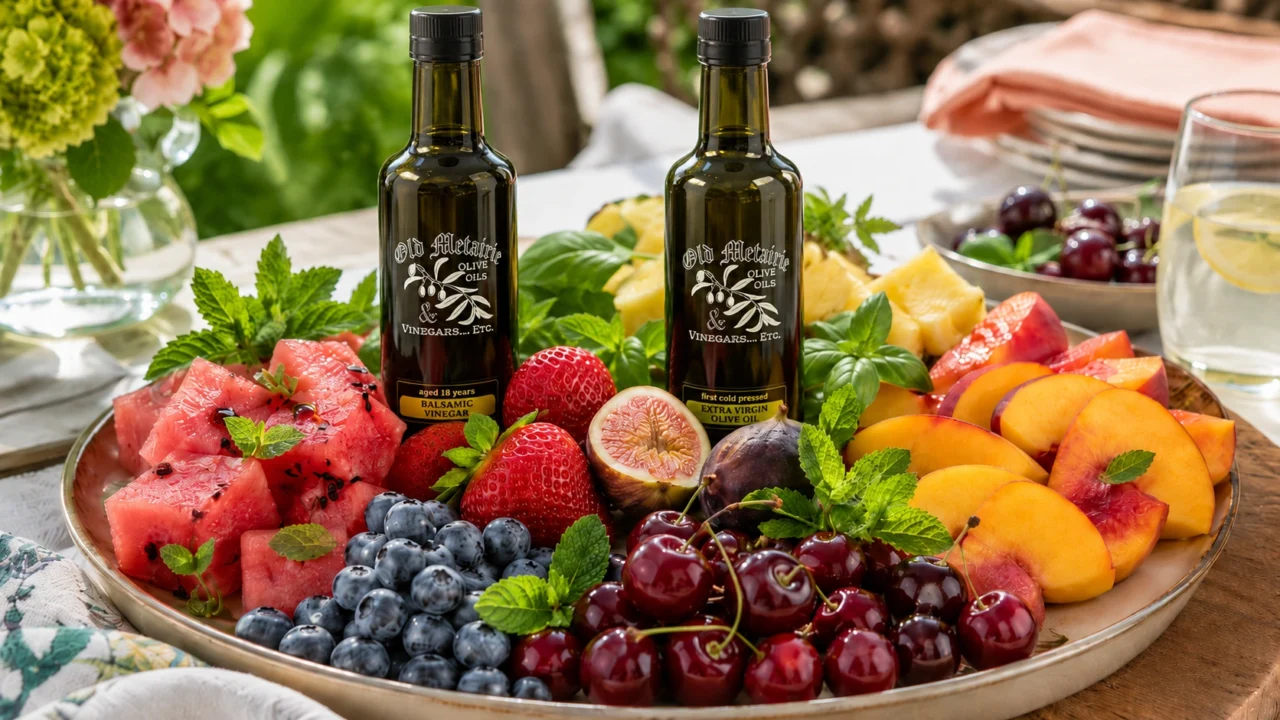
Balsamic vinegar on summer fruit is one of the easiest ways to turn fresh produce into something memorable. During July and August, Louisiana markets and grocery stores fill with peaches, melons, berries, figs, and other warm-weather favorites. A small drizzle of the right balsamic can bring out their natural sweetness while adding depth and balance.
This simple technique also helps during hot Metairie and New Orleans afternoons. You can prepare most fruit dishes without turning on the oven. In addition, the same bottle can flavor appetizers, salads, mocktails, grilled fruit, and desserts.
Below, you will find seven easy pairings, a basic fruit-balsamic formula, serving ideas, common mistakes, and practical tips for building your own combinations.
Why Does Balsamic Vinegar Taste Good on Fruit?
Fruit already contains sweetness and natural acidity. Balsamic vinegar adds another layer of acidity along with rich, cooked-fruit flavors. As a result, each bite tastes brighter and more complete.
An aged dark balsamic usually adds richness and sweetness. Meanwhile, a white or rosé balsamic keeps the flavor lighter and preserves the fruit’s bright color. Both styles work well, although the best choice depends on the fruit and the dish.
7 Easy Balsamic Vinegar and Summer Fruit Pairings
1. Peaches and White Balsamic
Slice ripe peaches and add a light white balsamic. Fresh basil, mint, goat cheese, or burrata can make the dish feel more substantial.
2. Watermelon and Rosé Balsamic
Combine watermelon cubes with rosé or fruit-forward white balsamic. Add feta, mint, cucumber, or a pinch of flaky sea salt.
3. Strawberries and Dark Balsamic
Dark balsamic is a classic partner for strawberries. Serve the mixture over vanilla ice cream, pound cake, yogurt, or cheesecake.
4. Blueberries and Lemon Balsamic
A citrus-forward balsamic adds brightness to blueberries. Spoon them over pancakes, oatmeal, ricotta toast, or a summer parfait.
5. Pineapple and Coconut Balsamic
Pineapple works well with tropical or coconut-inspired flavors. Grill it first for deeper caramelization, then drizzle just before serving.
6. Cherries and Chocolate Balsamic
Cherries and chocolate-flavored balsamic create an easy dessert topping. Try the combination with brownies, ice cream, or soft cheese.
7. Fresh Figs and Aged Balsamic
Quarter fresh figs and drizzle them with aged dark balsamic. Then add prosciutto, blue cheese, goat cheese, or toasted pecans.
The Easy Fruit-and-Balsamic Formula
Use this flexible formula whenever you have fresh fruit available:
- 2 cups fresh fruit
- 1 to 2 teaspoons balsamic vinegar
- 1 teaspoon extra virgin olive oil, optional
- A small pinch of sea salt
- Fresh herbs, cheese, nuts, or pepper, optional
Toss everything gently. Next, let the fruit rest for five to ten minutes. Taste before adding more vinegar because a small amount often provides enough flavor.
DIY Louisiana Summer Fruit Bar
A build-your-own fruit bar works well for backyard cookouts, bridal showers, brunches, birthday parties, and casual gatherings. Guests can create their own combinations, so you do not need to guess what everyone will enjoy.
Set Out These Four Stations
- Fresh fruit: watermelon, peaches, strawberries, blueberries, pineapple, cherries, and figs.
- Balsamics: one dark balsamic, one white balsamic, and one fruit-flavored option.
- Toppings: feta, goat cheese, mozzarella pearls, toasted pecans, pistachios, basil, and mint.
- Finishing touches: extra virgin olive oil, sea salt, cracked black pepper, and citrus zest.
Place small spoons or pour spouts beside the vinegar bottles. Also, remind guests to begin with a small drizzle. They can always add more after tasting.
How to Make a Balsamic Fruit Mocktail
Fruit balsamic can also add complexity to a refreshing nonalcoholic drink. Its sweet acidity works in a similar way to citrus juice or a shrub.
Simple Summer Balsamic Spritzer
Ingredients:
- 4 to 5 pieces of fresh fruit
- 1 teaspoon fruit or white balsamic vinegar
- Ice
- 6 to 8 ounces sparkling water
- Fresh mint or basil
Gently mash the fruit in a glass. Add the balsamic and ice. Then pour in the sparkling water and stir. Finish with fresh herbs and an extra piece of fruit.
Strawberry, peach, pineapple, blackberry, and citrus combinations work especially well. However, avoid pouring heavily because the balsamic should support the drink rather than overpower it.
Can You Add Olive Oil to Fruit?
Yes. A mild, fresh extra virgin olive oil can give fruit a silky texture and a savory finish. Olive oil works particularly well with peaches, watermelon, citrus, tomatoes, strawberries, and figs.
For example, combine sliced peaches with extra virgin olive oil, white balsamic, fresh basil, and a small amount of goat cheese. You can also finish watermelon with olive oil, rosé balsamic, feta, mint, and sea salt.
Choose a lighter oil when you want the fruit to remain the main flavor. In contrast, a robust or peppery oil can work well with cheese, herbs, and grilled fruit.
Not Sure Which Oil or Balsamic to Pair?
Visit Old Metairie Olive Oils & Vinegars for a free tasting. The team can help you compare flavors before choosing a bottle.
Tips for Better Balsamic Fruit
Start Small
Begin with one teaspoon. Too much vinegar can hide the fruit’s natural flavor.
Use Ripe Fruit
Vinegar improves good fruit, but it cannot completely fix hard or flavorless produce.
Add Herbs Last
Fresh basil and mint can bruise quickly. Fold them in shortly before serving.
Keep It Cool
Louisiana heat softens cut fruit quickly. Refrigerate it until you are ready to serve.
Common Mistakes to Avoid
Do not soak the fruit for hours. A brief rest helps the flavors combine. However, extended marinating can make delicate berries and watermelon too soft.
Avoid adding heavy sweeteners immediately. Ripe fruit and aged balsamic may already provide enough sweetness. Taste the mixture first. Afterward, add a little honey only when necessary.
Do not use the same balsamic for every fruit. Dark balsamic may discolor pale peaches or melon. Therefore, choose white or rosé balsamic when appearance matters.
Skip warm outdoor storage. Keep cut fruit refrigerated or properly chilled, especially during a Louisiana summer gathering.
Frequently Asked Questions
What fruit goes best with balsamic vinegar?
Strawberries, peaches, watermelon, blueberries, cherries, figs, pineapple, pears, and citrus all pair well with balsamic vinegar. The best match depends on whether the balsamic is dark, white, rosé, or fruit-flavored.
How much balsamic should I put on fruit?
Start with one teaspoon for every two cups of fruit. Toss gently and taste. You can add another teaspoon when the flavor seems too mild.
Should I use dark or white balsamic on fruit?
Use dark balsamic for richer fruit such as strawberries, cherries, and figs. Choose white or rosé balsamic for peaches, melon, pineapple, and dishes where you want to preserve a bright color.
Can I put balsamic vinegar on watermelon?
Yes. Watermelon pairs well with white or rosé balsamic, feta cheese, mint, cucumber, olive oil, and sea salt. Add the vinegar shortly before serving.
Can balsamic fruit be made ahead?
You can cut firm fruit a few hours ahead and refrigerate it. For the best texture, add the balsamic five to fifteen minutes before serving. Add herbs, cheese, and nuts last.
Can balsamic vinegar be used in mocktails?
Yes. Add approximately one teaspoon of fruit or white balsamic to muddled fruit, ice, and sparkling water. Start lightly and adjust after tasting.
Where can I taste balsamic vinegar in Metairie?
Old Metairie Olive Oils & Vinegars offers free tastings at 103 Focis Street in Metairie. No appointment is needed during regular store hours.
Keep Exploring
More Ways to Explore Olive Oil and Balsamic
Discover pairing ideas, balsamic education, seasonal recipes, and more ways to use gourmet olive oils and vinegars at home.
Taste Before You Choose
Find Your Favorite Summer Balsamic Pairing
Stop by Old Metairie Olive Oils & Vinegars for a free tasting, personalized pairing suggestions, gourmet pantry items, and gift ideas.
103 Focis Street, Metairie, LA 70005 • (504) 354-1275
Helpful outside resource: For general information about extra virgin olive oil terminology, cooking, freshness, and storage, visit the North American Olive Oil Association FAQ.
