
OLD METAIRIE • OLIVE OIL 101 • LOUISIANA
Why Is Olive Oil Peppery? How to Taste Olive Oil Like a Pro
That little tickle in the back of your throat may be telling you something. Learn how to taste extra virgin olive oil and recognize fruity, grassy, bitter and peppery flavors.
QUICK ANSWER
Why Does Good Olive Oil Sometimes Taste Peppery?
A peppery or slightly bitter sensation can be a normal and desirable characteristic of fresh extra virgin olive oil. Professional olive oil tasting evaluates three important positive characteristics: fruitiness, bitterness and pungency.
Therefore, a little bitterness on your tongue or a peppery sensation in your throat does not automatically mean something is wrong with the oil. Those characteristics are actually part of what professional tasters evaluate.
It certainly can.
Learning how to taste olive oil changes the way many people shop for it. Instead of choosing a bottle because it looks pretty or because the oil appears especially green, you can begin paying attention to aroma, flavor, bitterness, pungency and finish.
Best of all, you do not need to be an olive oil expert to start.
3 Flavors to Look for When Tasting Olive Oil
Professional sensory evaluation gets much more detailed. However, beginners can start by paying attention to three important positive characteristics.
Fruity
“Fruity” does not necessarily mean sweet. Fresh olive oil can remind you of green apple, herbs, grass, tomato leaf or ripe fruit.
Bitter
A clean bitterness can be a positive characteristic. It is often especially noticeable in oils produced from greener olives.
Pungent
This is the peppery sensation that may appear toward the back of your throat. Some oils produce only a tickle, while robust oils may have a much stronger finish.
OLIVE OIL MYTHBUSTER
Myth: Bitter Olive Oil Must Be Bad
Not necessarily. Bitterness is one of the positive sensory characteristics recognized in virgin olive oil.
The important distinction is between the natural bitterness and pungency of an olive oil and undesirable flavors associated with defects or deterioration.
This is one reason tasting oils side by side is so useful. Once you compare different varieties, you can begin recognizing how a delicate oil differs from a more robust one.
Want to dig deeper into quality? Read our guide to spotting high-quality olive oil.
DIY: How to Taste Olive Oil at Home
You do not need professional tasting equipment. Grab a few small, clean cups or glasses and two or three different extra virgin olive oils.
1. Pour
Pour a small amount of olive oil into a clean cup or glass. You only need enough for a few small tastes.
2. Warm It Gently
Cup the glass in your hand and cover the top with your other hand. Your hand gently warms the oil and helps release its aromas.
3. Smell
Uncover the glass and smell the oil. Do not worry about finding fancy words. Instead, ask yourself what it reminds you of. Do you notice grass, herbs, apple, tomato or something else?
4. Sip
Take a small sip and allow the oil to move across your mouth. As you taste, pay attention to both flavor and sensation.
5. Notice the Finish
After swallowing, pay attention to what happens next. Is the oil mild? Bitter? Peppery? Does the flavor disappear quickly, or does it linger?
Does Greener Olive Oil Mean Better Olive Oil?
No. Color alone is not a dependable way to judge olive oil quality.
Olive oil can vary in appearance depending on the olives and other factors. Professional sensory evaluation focuses on aroma, flavor and other characteristics rather than assuming the greenest oil must be the best.
DIY tip: During your own tasting, smell and taste the oils before deciding which one you prefer based on appearance.
What Should Good Extra Virgin Olive Oil Taste Like?
There is no single flavor that every quality olive oil must have.
One oil may be mild and fruity. Another can taste grassy and herbaceous. Meanwhile, a robust oil may have noticeable bitterness followed by a strong peppery finish.
Depending on the variety, origin, harvest and other factors, people may notice flavors or aromas reminiscent of:
🍏 Green Apple
🌿 Herbs
🍅 Tomato Leaf
🌰 Nutty Notes
🌶️ Pepper
The goal is not to decide which description sounds most sophisticated. Instead, find the oil that tastes good to you and works with the foods you enjoy.
TASTE THE DIFFERENCE YOURSELF
Try a Mild Olive Oil vs. a Robust Olive Oil
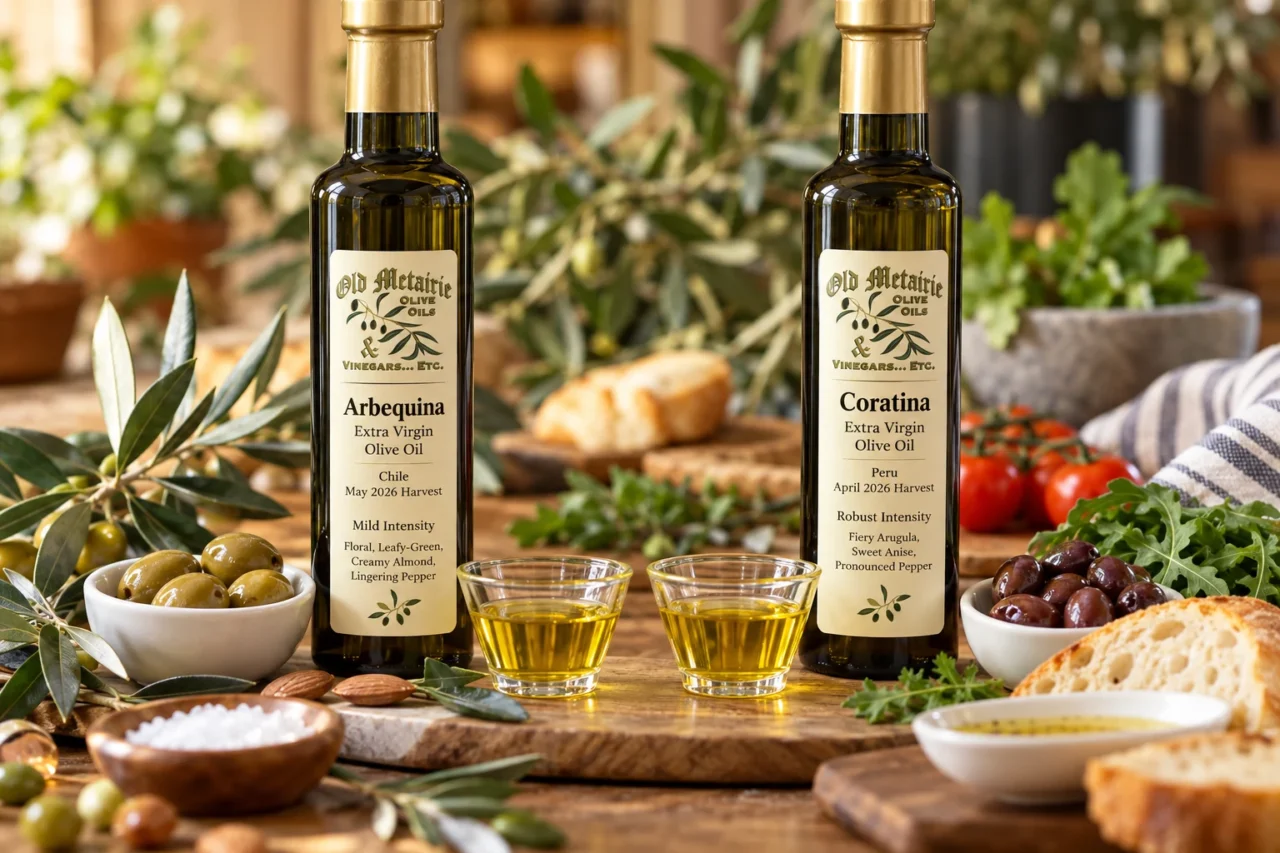
Want to understand what “mild,” “robust” and “peppery” actually mean? These two current extra virgin olive oils give you an easy way to experience the difference for yourself.
Arbequina EVOO
Chile • May 2026 Harvest
If you are new to tasting olive oil, start here. Old Metairie’s Arbequina EVOO has a floral aroma, delicate leafy-green character and creamy almond notes followed by a lingering peppery finish.
What to notice:
🌸 Floral aroma
🌿 Delicate green notes
🌰 Creamy almond
🌶️ Lingering pepper
Try it with: bread, seafood, salads, lighter vegetables or as a finishing drizzle.
Coratina EVOO – Peru
Peru • April 2026 Harvest
Ready to experience the bold side of EVOO? Old Metairie’s Coratina is a high-biophenol oil with fiery arugula, sweet anise and pronounced lingering pepper.
What to notice:
🌿 Fiery arugula
🌱 Bold green character
✨ Sweet anise
🌶️ Pronounced pepper
Try it with: hearty bread, grilled vegetables, beans, steak, soups or anywhere you want the olive oil to make itself known.
🥄 Try the Side-by-Side Taste Test
Taste the Arbequina first. Notice its softer character and creamy almond notes. Then taste the Coratina. Pay attention to its bolder green character and stronger lingering pepper. Comparing them back to back makes olive oil intensity much easier to understand.
Want more choices? Browse Old Metairie’s complete collection.
GO ONE STEP DEEPER
Why Do Some Olive Oils Have a Stronger Flavor?
Olive variety, ripeness, growing conditions, harvest timing, processing and freshness can all influence the final flavor of an extra virgin olive oil.
Phenolic compounds are also associated with some of the bitterness and pungency people experience when tasting EVOO. Therefore, a bold oil is not necessarily “too strong.” It may simply have a very different sensory profile from a mild olive oil.
Old Metairie carries extra virgin olive oils with published chemistry information, which makes it possible to explore both flavor and the numbers behind the bottle.
TRY THIS AT HOME
Build Your Own Olive Oil Tasting Flight
This is an easy activity for a dinner party, date night or family gathering.
Choose three different oils:
- One delicate oil with a softer flavor.
- One medium oil with more noticeable fruitiness or bitterness.
- One robust oil with a stronger peppery finish.
Number the cups instead of showing everyone the bottles. Then taste each oil and write down:
- What do you smell?
- Is it mild or bold?
- Do you notice bitterness?
- Is there a peppery finish?
- Which one would you use for bread?
- Which one would you drizzle over vegetables?
- Which one is your favorite?
Fun tip: Compare everyone’s notes before revealing which oil was in each cup. There are no prizes for using fancy tasting words. Pay attention to what you actually enjoy.
Your Olive Oil Tasted Great — Now Keep It That Way
Once you find an oil you love, proper storage matters. Louisiana kitchens can become especially warm, so light, heat and air deserve attention.
We already created a complete Louisiana-specific guide explaining where to keep your bottle, what to avoid and how our climate can affect freshness.
Match Olive Oil Intensity to Your Food
Once you know what you enjoy, choosing olive oil for different foods becomes easier.
| Oil Style | Flavor | Try It With |
|---|---|---|
| Delicate | Mild, smooth, fruity | Fish, delicate greens, bread and mild vegetables |
| Medium | Balanced, fruity, lightly bitter | Pasta, chicken, salads and roasted vegetables |
| Robust | Bold, bitter, peppery | Steak, beans, hearty soups, tomatoes and grilled vegetables |
WHAT SHOULD YOU PAIR WITH IT?
Turn Your Favorite Olive Oil Into a Flavor Pairing
Once you discover whether you prefer delicate, medium or robust olive oil, explore Old Metairie’s pairing guide. You’ll find ideas for matching oils and balsamics with foods from seafood and salads to desserts.
METAIRIE • NEW ORLEANS • SOUTHEAST LOUISIANA
The Easiest Way to Learn? Taste Oils Side by Side
You can read flavor descriptions all day. However, tasting two or three olive oils side by side makes the differences much easier to understand.
Old Metairie Olive Oils & Vinegars offers free in-store tastings with no appointment needed at 103 Focis Street in Old Metairie, Louisiana.
You can sample different olive oils, compare flavor profiles and discover whether you prefer something delicate, medium or robust.
You may discover that you love a bold, peppery oil. On the other hand, you may prefer something softer and fruitier. Either way, you do not have to guess from the label.
How Do Professionals Evaluate Olive Oil?
The International Olive Council maintains standards and methods for the sensory analysis of virgin olive oils. Its resources cover professional assessment methods, tasting glasses and organoleptic evaluation.
Frequently Asked Questions About Tasting Olive Oil
Why does olive oil feel peppery in the back of my throat?
Some extra virgin olive oils create a pungent or peppery sensation in the throat. Pungency is recognized as a positive sensory characteristic of virgin olive oil and can be especially noticeable in robust oils.
Is bitter olive oil bad?
Not automatically. Bitterness is one of the positive characteristics used when evaluating virgin olive oil. The amount of bitterness varies from one oil to another.
What should good olive oil taste like?
Flavor varies. Extra virgin olive oils can be fruity, grassy, herbaceous, mild, bitter or peppery. Variety, harvest and origin can all influence the flavor profile.
Does dark green olive oil mean it is better?
No. Color alone is not a reliable way to determine olive oil quality. Aroma, flavor, freshness, chemistry and the absence of sensory defects provide much more useful information.
How do you taste olive oil?
Pour a small amount into a clean glass, warm it gently in your hand, smell it and take a small sip. Then pay attention to fruitiness, bitterness, pungency and the flavors that remain after you swallow.
Which olive oil can I try if I prefer a mild flavor?
Old Metairie’s Arbequina EVOO is currently labeled mild intensity and offers floral, leafy-green and creamy almond notes with a lingering peppery finish.
Which olive oil should I try for a strong peppery flavor?
For a more robust tasting experience, try Old Metairie’s Coratina EVOO from Peru. Its current tasting notes include fiery arugula, sweet anise and pronounced lingering pepper.
Where can I taste olive oil near New Orleans?
Old Metairie Olive Oils & Vinegars offers free tastings with no appointment needed at 103 Focis Street in Old Metairie, Louisiana. Visitors can compare olive oils and balsamic vinegars before choosing their favorites.
Keep Exploring Old Metairie Olive Oils
Learn more about freshness, quality and flavor—or go straight to finding your next bottle.
TASTE • COMPARE • DISCOVER
Which Olive Oil Will Be Your Favorite?
Taste different olive oils and balsamic vinegars before you buy at Old Metairie Olive Oils & Vinegars—or order your favorites online.
103 Focis Street • Old Metairie, Louisiana 70005
Tuesday–Friday 10:00 AM–5:30 PM • Saturday 10:00 AM–4:00 PM
