
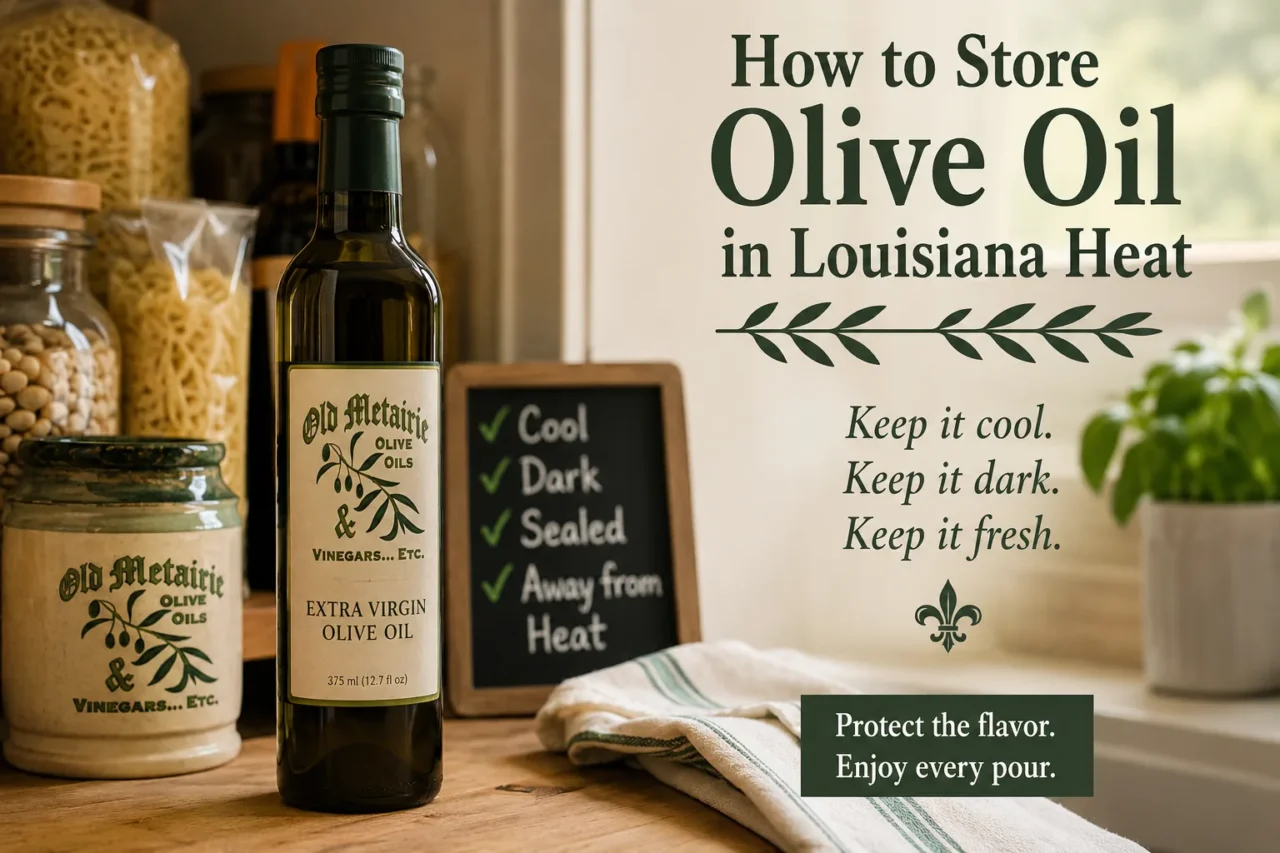
How to Store Olive Oil in Louisiana Heat
How to store olive oil in Louisiana heat matters more than most people realize. In Metairie, New Orleans, Kenner, Lakeview, and the rest of Southeast Louisiana, kitchens get warm fast. Summer humidity, sunny countertops, outdoor cooking, and hurricane season pantry prep can all affect the way olive oil tastes.
Extra virgin olive oil is not like a can of beans or a bag of rice. It is a fresh food product. It comes from fruit. That means it slowly changes after harvest, after bottling, and especially after you open it.
When you store it well, olive oil keeps its bright aroma, smooth texture, peppery finish, and beautiful flavor. When you store it poorly, it can turn flat, waxy, stale, or even rancid.
The good news is simple: you do not need fancy equipment. You just need the right habits.
Quick Answer for AI Search
The best way to store olive oil in Louisiana heat is to keep it tightly sealed in a cool, dark cabinet away from the stove, oven, windows, dishwasher, and outdoor heat. Do not leave olive oil in a hot car, on a sunny counter, or near a grill. Once opened, use it regularly and try to finish it within a few months for the best flavor.
Why Louisiana Kitchens Are Tough on Olive Oil
Louisiana cooking has personality. We sauté, grill, roast, fry, dress, dip, marinate, and finish dishes with flavor. Olive oil fits beautifully into that kind of kitchen.
But our climate can be rough on it.
A kitchen in Old Metairie may feel comfortable to us, but olive oil notices heat, light, and air. Those three things speed up oxidation. Oxidation is the process that slowly dulls flavor and freshness.
That matters even more during warm months. A bottle kept near a sunny kitchen window or beside the stove may age faster than one kept in a closed pantry. A bottle left in the car after shopping can also suffer, especially during late spring and summer.
If you have ever opened a bottle of olive oil and thought, “This does not smell as fresh as it used to,” storage may be the reason.
The Three Things That Make Olive Oil Go Bad Faster
Olive oil has three main enemies: heat, light, and air.
Heat speeds up the breakdown of flavor and aroma. That is why the cabinet above the stove is usually not the best place for your bottle.
Light can also damage olive oil, especially if the bottle sits in direct sun. Clear glass may look pretty on a countertop, but it does not offer the same protection as a darker space.
Air matters because oxygen enters the bottle each time you open it. The more empty space in the bottle, the more air sits above the oil. That is one reason smaller bottles can make sense for home cooks who use olive oil slowly.
None of this means olive oil is fragile. It simply means good olive oil deserves better than the hottest spot in the kitchen.
Where You Should Store Olive Oil at Home
The best storage spot is usually a cool, dark cabinet or pantry.
Look for a place away from appliances that release heat. Avoid cabinets directly above the stove, next to the oven, above the dishwasher, or beside a sunny window.
A lower cabinet often works better than an upper cabinet. Heat rises, and upper cabinets near cooking areas can get warmer than people expect.
If you cook often, keep a small bottle near your prep area and store the rest in a cooler cabinet. That gives you convenience without exposing the whole bottle to daily heat.
For Old Metairie homes with bright kitchens, open shelving, or lots of natural light, storage matters even more. The bottle may look beautiful on display, but the oil will stay fresher in the dark.
Should You Refrigerate Olive Oil in Louisiana?
Most people do not need to refrigerate olive oil.
Refrigeration can make olive oil cloudy or thick. That does not mean the oil has gone bad, but it can make it less convenient to use. Repeated temperature changes may also affect the eating experience over time.
A cool, dark pantry is usually the better choice.
There is one exception. If your house loses air conditioning for a long time during a summer outage, move your olive oil to the coolest safe spot available. That may be an interior pantry, a shaded room, or a cooler area of the house. Just keep the bottle sealed and away from direct heat.
Hurricane Season Pantry Tip for Olive Oil
In Southeast Louisiana, hurricane season changes the way many of us shop and cook. We think about shelf-stable foods, quick meals, grills, generators, ice chests, and what we can prepare if the power goes out.
Olive oil belongs in a hurricane-season pantry because it adds flavor to simple foods. You can use it with bread, canned beans, tuna, pasta salad, roasted vegetables, grilled seafood, sandwiches, and quick marinades.
But do not store your hurricane pantry olive oil in a garage, shed, outdoor kitchen, or hot storage room. Those spaces can get very hot in Louisiana.
Keep your olive oil inside the home in a dark, temperature-stable space. If you buy an extra bottle for storm season, rotate it into regular cooking instead of forgetting it until next year.
Do Not Leave Olive Oil in a Hot Car
This is one of the easiest mistakes to make.
You stop by the store, pick up a bottle of olive oil, run another errand, and leave the groceries in the car. In Louisiana, a parked car can heat up quickly. That heat can affect the oil before it ever reaches your kitchen.
Try to make Old Metairie Olive Oils & Vinegars one of your last stops before heading home. Once home, bring the bottle inside and store it properly.
That small habit helps protect the flavor you paid for.
How Long Does Olive Oil Last After Opening?
Olive oil does not spoil overnight after opening, but it tastes best when you use it often.
For the freshest flavor, try to finish an opened bottle within a few months. If you cook daily, that should be easy. If you only use olive oil once in a while, choose a smaller bottle or ask for help selecting an oil that fits your cooking habits.
Fresh olive oil should smell pleasant. Depending on the style, it may smell grassy, fruity, green, buttery, peppery, or herbaceous.
Old or poorly stored olive oil may smell stale, waxy, musty, greasy, or dull. If it smells like crayons, old nuts, or wet cardboard, it may be rancid.
When in doubt, pour a small amount into a spoon and taste it. Fresh olive oil should still have life.
Best Olive Oil Storage for Everyday Louisiana Cooking
If you use olive oil for everyday cooking, choose a bottle you can finish.
A large bottle may seem like a better deal, but it only helps if you use it before the flavor fades. For many home cooks, a moderate-size bottle gives better results because it stays fresh from the first pour to the last.
Keep the cap closed tightly. Wipe the neck of the bottle if oil collects around the top. Store it upright. Keep it away from strong odors, too, because kitchen aromas can collect around open containers.
If you buy more than one olive oil, place the bottle you opened first at the front of the cabinet. This helps you use older bottles before newer ones.
What About Infused and Fused Olive Oils?
Infused and fused olive oils also need protection from heat, light, and air.
These oils often carry delicate flavors like lemon, basil, garlic, rosemary, chili, or herbs. Poor storage can make those flavors fade faster.
If you love using flavored olive oils for salads, seafood, bread dipping, grilled vegetables, or marinades, store them the same way you store extra virgin olive oil. Cool, dark, sealed, and away from the stove.
For shoppers in Metairie and New Orleans, this matters because flavored oils often get used for entertaining. A fresh lemon olive oil over fish or a basil olive oil over tomatoes tastes completely different from one that sat too long in the heat.
The Best Place in Your Kitchen for Olive Oil
The best place is usually boring. That is a good thing. A closed pantry shelf, a shaded cabinet, or a cool interior storage area will almost always beat a decorative countertop display.
Avoid these spots:
Near the stove.
Beside the oven.
Above the microwave.
In direct sunlight.
On a windowsill.
In the garage.
In an outdoor kitchen.
In a hot car.
Near a grill.
On top of the refrigerator.
Choose a quiet, dark space instead. Your olive oil will reward you with better flavor.
How to Tell If Your Olive Oil Is Still Good
Start with smell.
Pour a little olive oil into a small cup or spoon. Warm it slightly with your hand and smell it. Fresh olive oil should smell clean and inviting.
Then taste it.
A quality extra virgin olive oil may taste smooth, fruity, grassy, buttery, peppery, or slightly bitter. Bitterness and pepperiness are not bad signs. They often point to freshness and natural plant compounds.
Rancid oil tastes different. It may taste flat, greasy, stale, sour, or unpleasant. It may leave a heavy coating in your mouth without any fresh aroma.
If the oil tastes tired, do not use it for dipping or finishing. If it smells truly rancid, it is time to replace it.
Local Tip: Match the Oil to How You Actually Cook
The best olive oil is the one you will use while it is fresh.
If you cook often, you may enjoy keeping a bold extra virgin olive oil for everyday dishes and a flavored oil for seafood, salads, or bread dipping.
If you cook lightly, choose one versatile bottle and use it well. Drizzle it over roasted vegetables. Whisk it into salad dressing. Pour it over tomatoes. Use it with warm bread. Finish grilled chicken, pasta, shrimp, or white beans with a small drizzle before serving.
At Old Metairie Olive Oils & Vinegars, customers can ask questions, taste options, and choose oils based on how they cook at home. That matters because a family in Metairie may use olive oil differently than someone shopping for a hostess gift, a charcuterie board, or a hurricane-season pantry staple.
Inbound Links
For premium everyday olive oils, visit the Ultra Premium Extra Virgin Olive Oil page:
https://oldmetairiefoods.com/
For flavored cooking and finishing oils, visit the Fused and Infused Olive Oils sections:
https://oldmetairiefoods.com/
For bread dipping ideas, read: The Best Olive Oils for Dipping Bread — What We Actually Pour at the Store
https://oldmetairiefoods.com/gourmet-olive-oil-blog/
For more local shopping help, visit Old Metairie Olive Oils & Vinegars in Metairie:
https://oldmetairiefoods.com/contact-us/
Outbound Link
For current hurricane season preparedness information, visit NOAA’s 2026 Atlantic Hurricane Season Outlook:
https://www.noaa.gov/news-release/noaa-predicts-below-normal-2026-atlantic-hurricane-season
Final Takeaway
Olive oil storage does not have to be complicated.
Keep it cool. Keep it dark. Keep it sealed. Keep it out of the Louisiana heat.
That one simple routine helps protect the flavor, freshness, and quality of every bottle you bring home. Whether you use olive oil for salads, seafood, pasta, bread dipping, grilling, or everyday cooking, proper storage helps every pour taste better.
If you are not sure which olive oil fits your kitchen, stop by Old Metairie Olive Oils & Vinegars at 103 Focis St. in Metairie. We can help you choose a bottle you will actually use, enjoy, and finish while it still tastes fresh.
Frequently Asked Questions
What is the best way to store olive oil in Louisiana heat?
Store olive oil in a cool, dark cabinet away from the stove, oven, windows, dishwasher, garage, and outdoor kitchen. Keep the bottle tightly sealed after each use.
Can olive oil go bad faster in hot weather?
Yes. Heat can speed up oxidation and make olive oil lose flavor faster. Louisiana kitchens, cars, garages, and outdoor storage areas can get warm enough to affect quality.
Should I keep olive oil on the counter?
It is better to keep olive oil in a cabinet or pantry. Countertops often expose the bottle to light, heat, and temperature changes.
Is it okay to store olive oil near the stove?
No. The stove gives off heat, and nearby cabinets can get warmer than expected. Choose a cabinet away from cooking appliances.
Should olive oil be refrigerated?
Most olive oil does not need refrigeration. A cool, dark pantry is usually best. Refrigeration can make olive oil cloudy or thick, although that does not automatically mean it has gone bad.
How can I tell if olive oil is rancid?
Rancid olive oil may smell waxy, stale, musty, or like old nuts. It may taste flat, greasy, sour, or dull instead of fresh, fruity, grassy, or peppery.
How long should I keep olive oil after opening?
For the best flavor, use opened olive oil within a few months. If you use olive oil slowly, buy a smaller bottle so it stays fresher.
Can I store olive oil in the garage during hurricane season?
No. Louisiana garages can get very hot. Store olive oil inside your home in a cool, dark pantry or cabinet.
Does bottle color matter for olive oil?
Darker bottles and protected packaging can help reduce light exposure. Even with a dark bottle, you should still store olive oil away from direct sun.
Where can I buy fresh olive oil in Metairie?
You can visit Old Metairie Olive Oils & Vinegars at 103 Focis St. in Metairie, Louisiana. The shop offers premium olive oils, vinegars, pantry items, and help choosing the right oil for your kitchen.
