
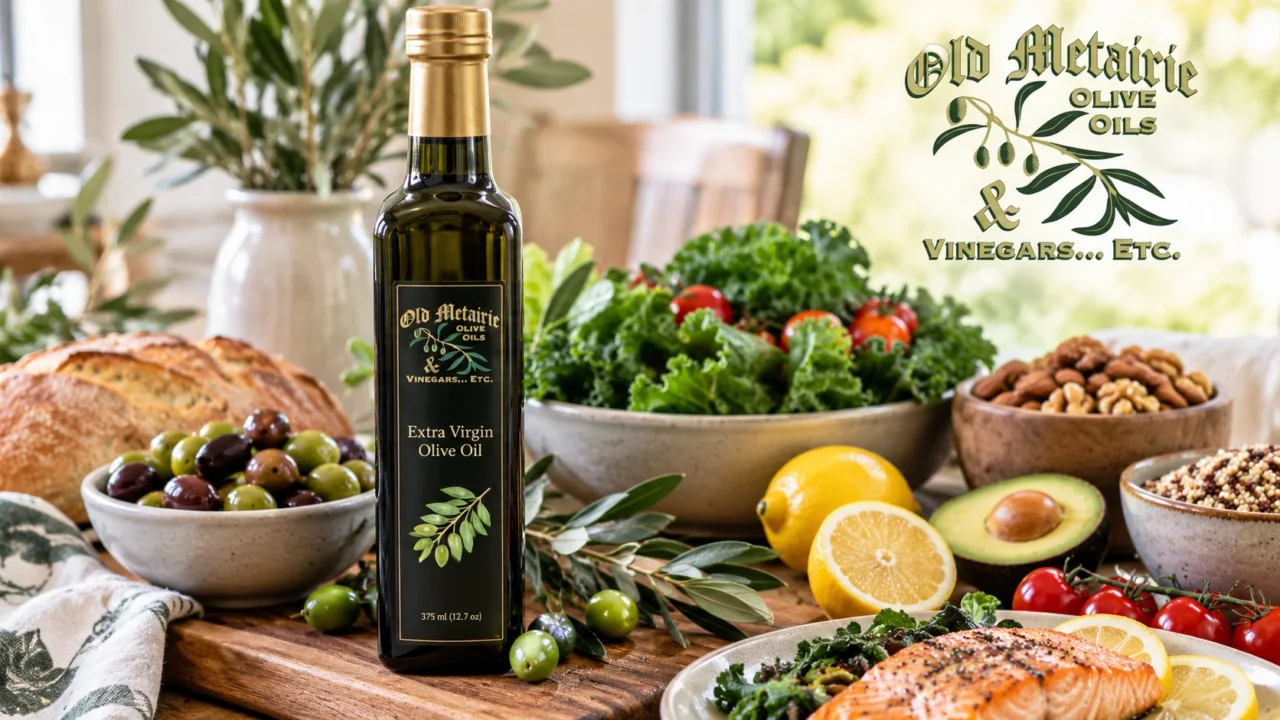
September Is Healthy Aging Month
OLD METAIRIE • METAIRIE • NEW ORLEANS • SOUTHEAST LOUISIANA
Olive Oil for Healthy Aging: 7 Everyday Benefits of Extra Virgin Olive Oil After 40
Olive oil for healthy aging is not about finding a miracle food. Instead, it is about building small eating habits that are easier to maintain for years. Extra virgin olive oil can be one flavorful part of a balanced, Mediterranean-style approach to eating as we get older.
Is Olive Oil Good for Healthy Aging?
Yes, olive oil can fit well into a healthy aging eating pattern. Extra virgin olive oil is rich in monounsaturated fat and also contains naturally occurring plant compounds. In addition, olive oil is one of the main fat sources used in Mediterranean-style diets.
The American Heart Association recommends Mediterranean-style eating as one healthy dietary pattern. It emphasizes vegetables, fruit, whole grains, beans, nuts, fish and plant oils such as olive oil.
Most importantly, the benefit is not simply adding unlimited olive oil to everything you already eat. A better strategy is often to use olive oil instead of foods that contain more saturated fat.
Why Are We Talking About Healthy Aging in September?
September is Healthy Aging Month. In September 2026, the U.S. Office of Disease Prevention and Health Promotion is encouraging Americans of all ages to think about lifelong habits that can support health and independence as they get older.
Those habits include staying active, eating nutrient-dense foods, maintaining relationships and taking an active role in health care.
That makes September a perfect time to look at small kitchen habits that may be easier to maintain than another short-term diet.
Healthy aging does not begin at 65. In fact, many of the habits that matter later in life are built decades earlier.
For adults in their 40s, 50s, 60s and beyond, food choices can be one piece of that bigger picture. Olive oil is especially interesting because it can make nutritious foods taste better while also replacing some fats that are higher in saturated fat.
Here are seven practical ways extra virgin olive oil can fit into healthy aging.
Olive Oil Provides Mostly Monounsaturated Fat
Olive oil is naturally high in monounsaturated fatty acids, including oleic acid.
That matters because replacing some saturated fats with unsaturated fats can be part of a heart-conscious eating pattern.
The key word is replacing. Instead of simply adding more calories, consider using olive oil in place of butter or other fats that are higher in saturated fat when it makes sense.
It Fits Naturally Into Heart-Friendly Eating
Heart health becomes increasingly important as we age. Fortunately, olive oil works naturally with many foods already encouraged in heart-friendly dietary patterns.
For example, drizzle it over vegetables, use it with beans, whisk it into salad dressing or pair it with whole grains.
The FDA has recognized a qualified health claim for edible oils high in oleic acid. Supportive, although not conclusive, evidence suggests that consuming about 1½ tablespoons of high-oleic oils daily may reduce coronary heart disease risk when those oils replace fats higher in saturated fat without increasing total daily calories.
Healthy Aging Tip: Think “Swap,” Not “Add”
A heart-conscious approach does not mean pouring extra olive oil over every meal. Instead, ask where olive oil can replace a less desirable fat. That simple mindset makes the change much easier to understand.
Extra Virgin Olive Oil Contains Plant Compounds
Extra virgin olive oil is more than just fat. It also contains naturally occurring plant compounds, including polyphenols.
These compounds are one reason fresh extra virgin olive oil attracts so much attention from nutrition researchers.
However, not every bottle is identical. Olive variety, growing conditions, harvest timing, storage and freshness can all affect an oil’s chemistry and flavor.
Want to learn how quality affects olive oil?
Read
How to Spot High Quality Olive Oil
for more tips about freshness, labels and quality indicators.
It Is Part of Mediterranean-Style Eating
When researchers talk about olive oil and health, they usually are not talking about olive oil alone.
Instead, olive oil often appears within a larger Mediterranean-style pattern that includes vegetables, fruit, legumes, nuts, whole grains, fish and minimally processed foods.
The American Heart Association recognizes this style of eating as a heart-healthy dietary pattern. Therefore, olive oil works best as part of the bigger picture rather than as a nutritional shortcut.
A Healthy Dietary Pattern Also Matters for the Brain
Healthy aging involves more than the heart. Brain health matters too.
The American Heart Association notes that what we eat can influence brain health and that healthy dietary patterns, including Mediterranean-style eating, are associated with better cardiovascular and brain health.
Again, that does not mean a spoonful of olive oil prevents memory loss. Rather, olive oil can be one component of an overall dietary pattern built around minimally processed, nutrient-dense foods.
Olive Oil Can Make Healthy Foods More Enjoyable
There is another benefit that gets much less attention: flavor.
Plain vegetables may not excite everyone. Add a fresh, flavorful extra virgin olive oil, herbs and a little balsamic vinegar, however, and those vegetables suddenly become much more appealing.
A healthy eating habit is much more useful when you actually enjoy following it.
Make healthy food taste better:
Explore
Old Metairie Olive Oil & Vinegar Pairings
for easy flavor combinations.
Small Changes Can Be Easier to Maintain
Healthy aging is a long-term goal. Therefore, sustainable changes usually matter more than extreme short-term plans.
Start with one salad dressing, one vegetable dish or one butter swap. Once that becomes normal, make another change.
5 Easy Olive Oil Swaps for Healthy Aging
You do not need complicated recipes to start using olive oil differently. Try one of these simple swaps.
Instead of Butter on Vegetables
Try a flavorful extra virgin olive oil with herbs, pepper or a small amount of balsamic. Why it works: You replace some saturated fat while keeping plenty of flavor.
Instead of Bottled Salad Dressing
Whisk olive oil with balsamic vinegar, mustard, herbs and black pepper. Why it works: You control the ingredients and can adjust sweetness, acidity and seasoning yourself.
Instead of Mayonnaise on Some Sandwiches
Try a small drizzle of flavorful olive oil on tomato, vegetable or Mediterranean-style sandwiches.
Instead of Butter for Bread Dipping
Pair extra virgin olive oil with herbs, black pepper or balsamic vinegar. A small amount can deliver a lot of flavor.
Instead of Heavy Sauces
Try a flavorful fused or infused olive oil to add garlic, citrus, herb or pepper flavor without covering food in a heavy sauce.
DIY Tips for Using Olive Oil Every Day
Keep It Visible
Place your everyday olive oil somewhere convenient but away from direct heat and sunlight. If it is easy to reach, you are more likely to use it.
Measure It Once
Pour one tablespoon into a measuring spoon so you know what that amount actually looks like. Many people are surprised by how easy it is to over-pour.
Use Flavor Strategically
A flavorful olive oil may help you rely less on heavy sauces because the oil itself contributes fruitiness, bitterness, pepperiness or herbs.
How Much Olive Oil Should You Eat Per Day?
There is no single amount that is right for every person. Your calorie needs, overall diet and health situation all matter.
The FDA states that supportive but not conclusive evidence suggests about 1½ tablespoons, or 20 grams, per day may reduce coronary heart disease risk when high-oleic oils replace fats higher in saturated fat and do not increase total calories.
Easy places to use olive oil:
- Homemade salad dressing
- Vegetables
- Beans and lentils
- Whole grains
- Fish
Is Drinking a Spoonful of Olive Oil Better?
You may have seen social media videos encouraging people to take a shot of olive oil every morning.
For most people, there is no need to treat olive oil like medicine.
Olive oil fits naturally into meals. In addition, olive oil still contains calories. Therefore, adding spoonfuls of it on top of an unchanged diet is different from replacing another fat with olive oil.
What Makes Extra Virgin Olive Oil Different?
Extra virgin olive oil, often shortened to EVOO, is produced through mechanical methods rather than chemical refining.
As a result, a quality extra virgin olive oil retains naturally occurring flavor and plant compounds.
Fresh EVOO can taste fruity, grassy, bitter or peppery. Those characteristics are not automatically defects.
Curious about processing?
Learn more in
Cold Pressed Olive Oil
Freshness and Chemistry Matter at Old Metairie Olive Oils
Old Metairie Olive Oils & Vinegars carries cold-pressed extra virgin olive oils from Veronica Foods.
The oils are evaluated using chemistry standards that include measurements such as polyphenol content, free fatty acid levels and peroxide values.
In addition, Old Metairie offers free tastings. That means you can compare mild, medium and robust oils before choosing the one you actually enjoy.
- Compare different olive varieties.
- Learn the harvest information.
- Taste mild, medium and robust oils side by side.
- Ask about polyphenol levels and chemistry.
- Find an oil that fits the foods you already eat.
How to Choose Olive Oil for Healthy Aging
Look for Harvest Information
Olive oil is a fresh agricultural product. Harvest information gives you useful context about freshness.
Protect It From Light and Heat
Store olive oil in a cool, dark area away from the stove or sunny windows.
Choose a Flavor You Enjoy
Some EVOOs are delicate and fruity. Others are grassy, bitter or peppery. Choose one you will actually enjoy using.
Do Not Save It Forever
Olive oil is meant to be used. Enjoy it regularly rather than saving the bottle indefinitely.
Healthy Aging in Metairie Starts With Everyday Habits
Living well as we age does not require a Mediterranean address.
Here in Metairie and the Greater New Orleans area, we can borrow the parts of Mediterranean-style eating that fit our own kitchens: vegetables, beans, seafood, whole grains, nuts and quality olive oil.
Louisiana food should still taste like Louisiana food. Healthy eating does not have to mean bland eating.
Frequently Asked Questions About Olive Oil for Healthy Aging
Is olive oil good for you after 40?
Olive oil can be part of a healthy eating pattern at any adult age. It provides mainly monounsaturated fat and fits naturally into Mediterranean-style eating.
Is olive oil good for people over 50?
Extra virgin olive oil can be a useful source of unsaturated fat for adults over 50. However, overall diet, exercise, sleep and preventive care also matter.
Is olive oil good for cholesterol?
Replacing some fats that are higher in saturated fat with unsaturated fats such as olive oil can fit into a heart-conscious eating pattern.
Does olive oil reduce inflammation?
Extra virgin olive oil contains naturally occurring compounds studied for antioxidant and inflammatory pathways. It should not be used to diagnose or treat an inflammatory condition.
Is extra virgin olive oil better than regular olive oil?
Extra virgin olive oil is mechanically produced without refining and retains its characteristic flavor and naturally occurring plant compounds.
Is olive oil good for brain health?
Olive oil is one part of Mediterranean-style eating. Healthy dietary patterns are associated with cardiovascular and brain health, but olive oil alone does not prevent cognitive decline.
Should I drink olive oil every morning?
There is usually no need to drink olive oil as a shot. It can be incorporated naturally into meals with vegetables, salads, beans, grains and other foods.
Trusted Healthy Aging Resources
U.S. Office of Disease Prevention and Health Promotion
American Heart Association
FDA Qualified Health Claim Information
Keep Exploring Old Metairie Olive Oils
Healthy eating is easier when healthy food tastes good. Explore more of Old Metairie Olive Oils before you go.
Not Sure Which Extra Virgin Olive Oil Is Right for You?
You do not have to guess from a grocery-store shelf.
Visit Old Metairie Olive Oils & Vinegars at 103 Focis Street in Metairie and taste different extra virgin olive oils before you buy.
Compare delicate, medium and robust oils and find a flavor you will actually enjoy using every day.
Tuesday–Friday: 10:00 AM–5:30 PM
Saturday: 10:00 AM–4:00 PM
Sunday–Monday: Closed
Health information disclaimer:
This article is for general educational purposes and is not medical advice. Olive oil is a food, not a treatment for disease. Nutrition needs vary by person. Speak with your physician, registered dietitian or other qualified healthcare professional about questions related to cholesterol, heart disease, diabetes, medications or other health conditions.
