
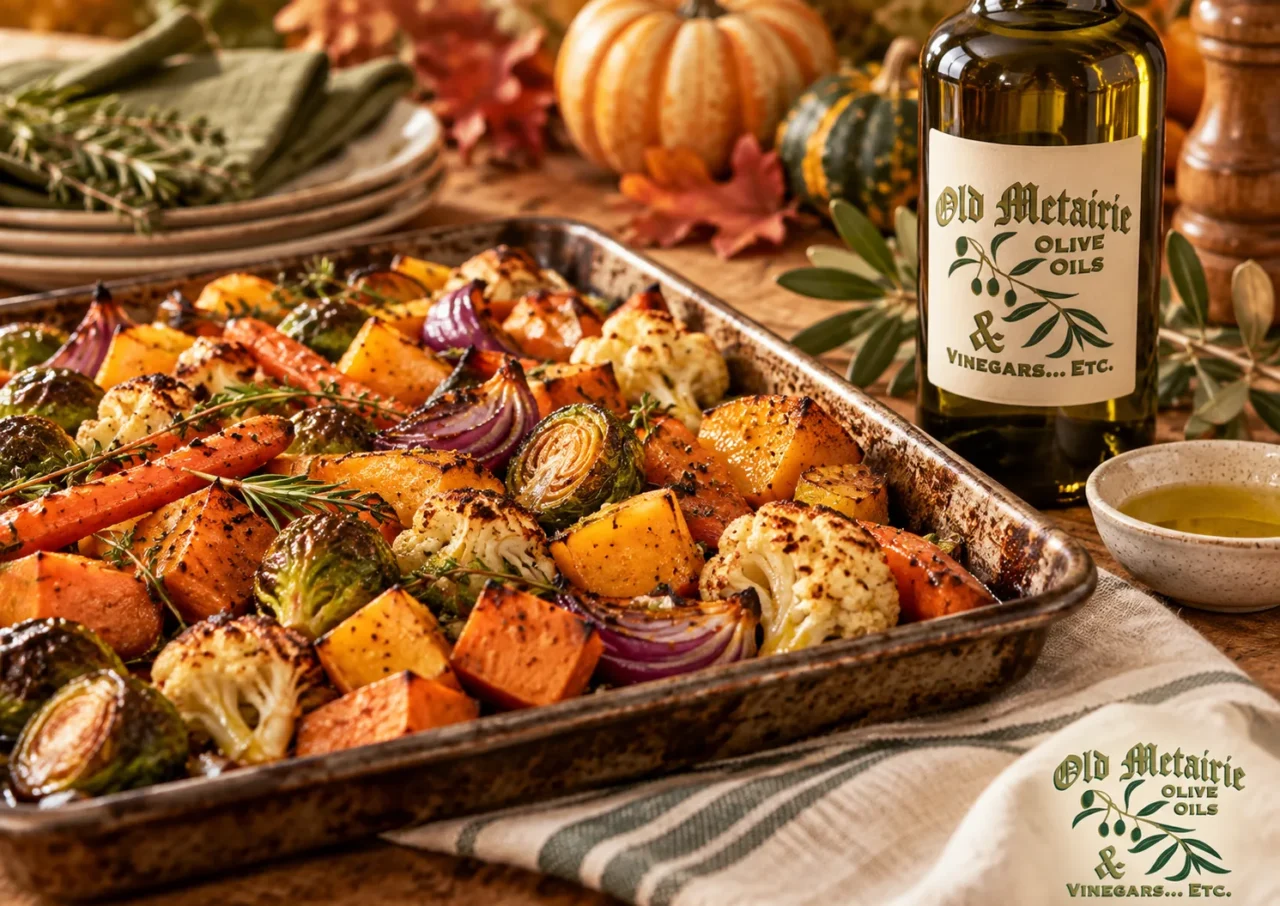
Fall Roasted Vegetables With Olive Oil: 7 Easy Pairings for Louisiana Kitchens
Turn sweet potatoes, Brussels sprouts, squash, carrots, cauliflower and other fall vegetables into easy weeknight sides using extra virgin olive oil, balsamic vinegar, herbs and simple flavor pairings.
What Olive Oil Is Best for Roasted Vegetables?
Extra virgin olive oil is an easy choice for roasted vegetables because it adds flavor, helps seasonings coat the vegetables and works well for roasting. For even more flavor, try garlic, herb, citrus or chili olive oils, then finish the vegetables with a small drizzle of balsamic vinegar after roasting.
Sweet potatoes, Brussels sprouts, butternut squash, carrots, onions, cauliflower and broccoli all become richer and more flavorful when roasted. Better yet, changing the olive oil or balsamic vinegar can make the same vegetable taste completely different from one week to the next.
According to the American Heart Association, olive oil is among the liquid plant oils that can be used for cooking, including roasting. The organization also recommends replacing some fats higher in saturated fat with unsaturated plant oils as part of an overall heart-healthy eating pattern.
Learn more about healthy cooking oils from the American Heart Association →
The Easy Sheet-Pan Formula for Fall Roasted Vegetables
You do not need a complicated recipe every time you roast vegetables. Start with this basic method and change the seasonings or finishing vinegar depending on what sounds good that night.
1. Pick Your Vegetables
Cut vegetables into similar-sized pieces so they cook at roughly the same speed.
2. Add Olive Oil
Use enough olive oil to lightly coat each piece rather than leaving oil pooled on the pan.
3. Season
Add pepper, herbs, garlic, seasoning blends or a modest amount of salt.
4. Roast
Spread everything in a single layer and roast until browned outside and tender inside.
7 Fall Vegetable & Olive Oil Pairings to Try
Use these as starting points rather than rigid recipes. Taste, adjust and find the combination your family actually enjoys.
1. Sweet Potatoes + Garlic Olive Oil
Sweet potatoes already bring natural sweetness, so a savory garlic olive oil creates an easy contrast.
Cut sweet potatoes into cubes, lightly coat them with garlic olive oil and add black pepper, rosemary or your favorite savory seasoning.
Finish it: Add just a touch of dark balsamic after roasting for sweet-and-savory depth.
2. Brussels Sprouts + Traditional EVOO + Balsamic
This is one of the easiest fall combinations. Halve the Brussels sprouts, coat them lightly with extra virgin olive oil and roast until the cut sides develop browned edges.
After roasting, drizzle them with a small amount of aged balsamic vinegar.
DIY trick: Place the cut sides against the sheet pan. More contact with the hot pan means better browning.
3. Butternut Squash + Rosemary Olive Oil
Rosemary and squash taste like fall without requiring a long ingredient list.
Toss cubed butternut squash with rosemary olive oil, pepper and a small amount of salt. Roast until the edges begin to caramelize and the center becomes tender.
Try this: Add toasted pecans just before serving for crunch.
4. Carrots + Citrus Olive Oil + White Balsamic
Fall food does not have to be heavy. A citrus-flavored olive oil can brighten roasted carrots while a white or rosé balsamic adds acidity and gentle sweetness.
Roast the carrots with olive oil first. Then drizzle the balsamic lightly over them after they come out of the oven.
Louisiana pairing idea: Serve them beside roasted chicken, pork or grilled seafood.
5. Cauliflower + Garlic or Chili Olive Oil
Cauliflower is mild enough to handle a stronger flavored oil.
Garlic olive oil makes it savory and familiar. Chili olive oil gives it a completely different personality.
DIY trick: Leave enough room between the florets. An overcrowded sheet pan traps steam and makes browning more difficult.
6. Red Onion + Extra Virgin Olive Oil + Fruity Balsamic
Roasted red onions become softer and sweeter in the oven. Pairing them with a fruit-forward balsamic after roasting adds another layer of flavor.
Cut onions into wedges, toss them with EVOO and pepper, then roast until browned around the edges.
Use them on: Flatbread, sandwiches, salads, burgers, grain bowls or a fall charcuterie board.
7. Mixed Fall Vegetables + Build-Your-Own Olive Oil Blend
Cannot decide? Make one large fall sheet pan.
Try sweet potatoes, carrots, Brussels sprouts, cauliflower and onion together. Start with a good extra virgin olive oil, then add garlic, rosemary, thyme, black pepper or your favorite seasoning.
Finish two ways: Divide the vegetables after roasting and use two different balsamic vinegars. One sheet pan suddenly becomes two flavor combinations.
Not Sure Which Flavor Goes With Your Vegetables?
Taste different extra virgin, fused and infused olive oils and balsamic vinegars at Old Metairie Olive Oils & Vinegars before deciding which bottle belongs in your fall kitchen.
How to Get Better Roasted Vegetables at Home
✓ Dry the Vegetables First
Water on the surface creates steam. Pat washed vegetables dry before adding olive oil if you want better browning.
✓ Do Not Crowd the Pan
Give vegetables some breathing room. If they are piled on top of each other, use two pans rather than forcing everything onto one.
✓ Cut Similar Vegetables to Similar Sizes
Tiny pieces can burn while larger ones remain firm. Consistent sizing helps everything finish closer to the same time.
✓ Add Balsamic at the End
One easy technique is to roast vegetables with olive oil and seasonings, then drizzle balsamic vinegar over the finished vegetables. This lets you control the sweetness and acidity before serving.
✓ Use Two Olive Oils for Two Different Jobs
Roast with an EVOO you enjoy cooking with. Then add a small amount of a stronger flavored olive oil just before serving. The finishing oil remains noticeable, so a little can go a long way.
✓ Taste Before Adding More Salt
Garlic, herbs, chili, citrus and balsamic vinegar all add flavor. Taste the vegetables after adding your finishing ingredients before automatically reaching for more salt.
🥗 Fall Salad
Add roasted vegetables to greens with nuts, cheese and vinaigrette.
🍳 Breakfast
Reheat vegetables and serve with eggs for an easy savory breakfast.
🥣 Grain Bowl
Add rice, quinoa or another grain with beans, chicken or seafood.
🌯 Wrap or Flatbread
Combine vegetables with hummus, cheese, greens or leftover protein.
🍝 Pasta
Toss leftover vegetables with warm pasta and a drizzle of olive oil.
🥘 Soup Starter
Add roasted vegetables to broth, beans or lentils for a quick second meal.
Should You Use Plain, Fused or Infused Olive Oil?
All three can work. The choice depends on how much flavor you want the oil itself to contribute.
A traditional extra virgin olive oil lets the flavor of the vegetables stay front and center. A fused or infused olive oil can add garlic, herbs, citrus, chili or other flavor without requiring several extra ingredients.
Old Metairie Olive Oils & Vinegars carries both fused and infused oils. Fused oils are created by crushing olives together with another ingredient during pressing. Infused oils begin with already-pressed olive oil and are flavored afterward.
Fall Cooking in Metairie Doesn’t Have to Wait for Cool Weather
South Louisiana has its own version of fall. September afternoons can still feel like summer, but school is back, football is on and holiday gatherings are getting closer.
Roasted vegetables are useful because they can fit beside Louisiana seafood, chicken, pork, pasta, sandwiches or a simple weeknight meal. Changing the olive oil and vinegar keeps them from becoming repetitive.
If you are in Metairie, New Orleans, Kenner, Lakeview, Jefferson or elsewhere in Southeast Louisiana, you can taste different oils and vinegars before buying instead of guessing which flavor you will like.
Fall Roasted Vegetables With Olive Oil FAQ
Can you roast vegetables with extra virgin olive oil?
Yes. Extra virgin olive oil can be used for roasting vegetables. The American Heart Association includes olive oil among cooking oils suitable for roasting and other everyday cooking methods.
What vegetables are best for fall roasting?
Sweet potatoes, Brussels sprouts, butternut squash, carrots, cauliflower, broccoli and onions are all easy choices.
When should I add balsamic vinegar to roasted vegetables?
One of the easiest methods is to drizzle a small amount over the vegetables after they finish roasting. This makes it easier to control the final acidity and sweetness.
Why aren’t my roasted vegetables getting crispy?
Too much moisture or an overcrowded pan are common causes. Dry vegetables before roasting and leave enough room around the pieces for hot air to circulate.
Can I use flavored olive oil for roasting vegetables?
Yes. Garlic, rosemary, citrus and chili-flavored olive oils can all work well with roasted vegetables. Choose a flavor that complements the vegetable rather than covering it up.
What olive oil goes with sweet potatoes?
Garlic, rosemary and traditional extra virgin olive oil all pair well with sweet potatoes. A small amount of dark or fruit-forward balsamic vinegar can provide additional contrast.
Where can I taste olive oil near New Orleans?
Old Metairie Olive Oils & Vinegars offers free tastings at 103 Focis Street in Metairie during regular business hours. No appointment is required.
Keep Exploring Old Metairie Olive Oils
Find your next flavor combination, learn more about olive oil or browse everything available online.
Taste Before You Choose
Visit Old Metairie Olive Oils & Vinegars and sample different extra virgin olive oils, fused and infused oils, aged balsamic vinegars and specialty vinegars before choosing your fall favorites.
103 Focis Street, Metairie, LA 70005
Tuesday–Friday 10:00 AM–5:30 PM • Saturday 10:00 AM–4:00 PM
Free tastings during regular business hours — no appointment needed.
(504) 354-1275
Nutrition information in this article is provided for general educational purposes and is not medical advice. Individual dietary needs vary.
