
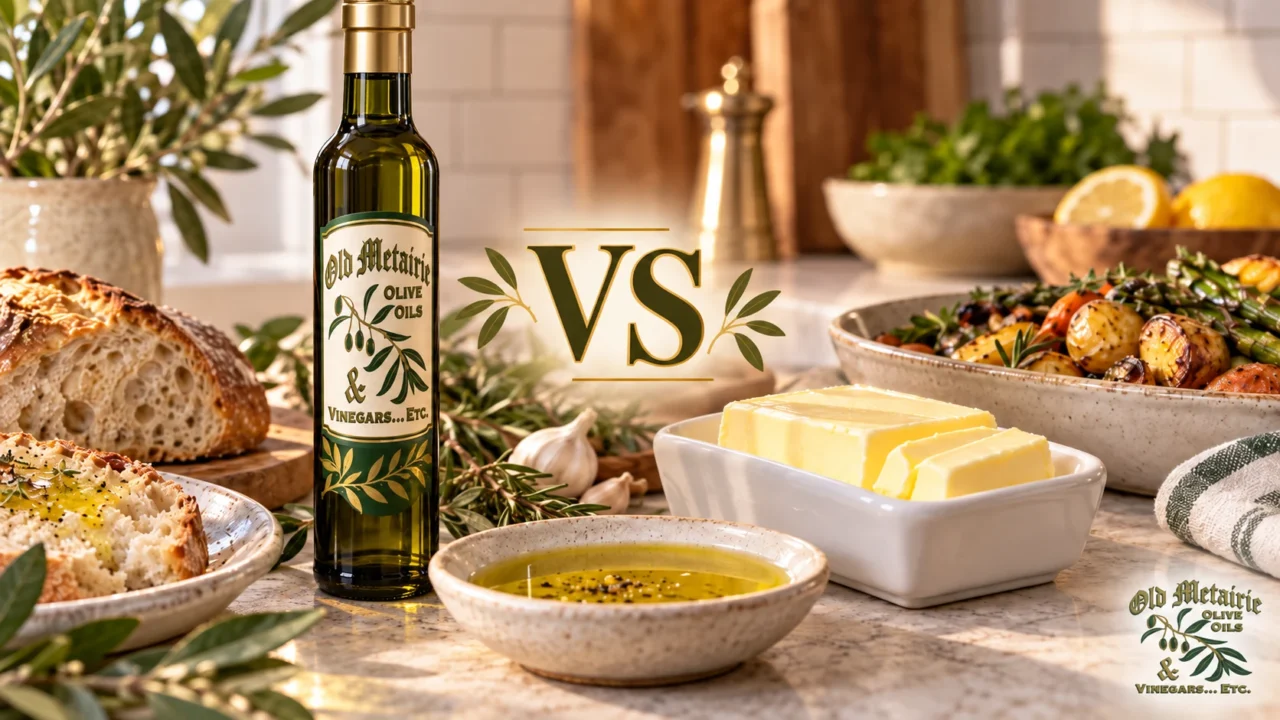
Olive Oil vs. Butter: Which Is Better for Everyday Cooking?
Olive oil vs butter is a common kitchen question, especially when cooler weather brings roasted vegetables, soups, potatoes, seafood, and other comfort foods back to Louisiana tables. The good news is that you do not have to give up flavor to make a smarter fat choice.
Olive Oil vs Butter: The Quick Answer
If you are choosing between olive oil and butter for everyday cooking, olive oil is generally the better choice for replacing saturated fat with unsaturated fat. Butter can still fit into an overall balanced diet, but it contains considerably more saturated fat.
The American Heart Association recommends choosing liquid, non-tropical plant oils such as olive oil in place of solid fats like butter, shortening, and lard.
However, this does not mean butter is forbidden. Instead, think about the foods you cook most often. When olive oil works well in the dish, switching from butter to olive oil is an easy way to change the type of fat in the meal without making cooking complicated.
Why the Type of Fat Matters
Both olive oil and butter contain fat and calories. Nevertheless, their fatty-acid profiles are different.
🫒 Extra Virgin Olive Oil
Olive oil is rich in monounsaturated fat. It also naturally contains plant compounds, including polyphenols, with the amount varying according to olive variety, freshness, harvest timing, processing, and storage.
🧈 Butter
Butter contains more saturated fat. Too much saturated fat can raise LDL cholesterol, which is one reason health organizations recommend replacing some saturated fat with unsaturated fat.
Therefore, the useful question is not simply, “Is olive oil healthy?” A better question is: What am I replacing with it?
Using olive oil instead of some butter, shortening, or other solid fats can be a practical way to improve the overall fat profile of a meal.
7 Easy Butter-to-Olive-Oil Swaps for Louisiana Kitchens
You do not need to redesign your entire diet. In fact, small substitutions are often easier to maintain. Try these practical ideas in Metairie, New Orleans, Kenner, Lakeview, Jefferson, and kitchens throughout Southeast Louisiana.
Try: Extra virgin olive oil, herbs, pepper, and a squeeze of lemon
Try: Olive oil with garlic, onion, or your favorite seasoning blend
Try: A small drizzle of flavorful EVOO with herbs and black pepper
Try: Olive oil dipping sauce with herbs and balsamic vinegar
Try: Extra virgin olive oil, herbs, vegetables, and a little Parmesan if desired
Try: Olive oil with lemon, parsley, garlic, or Creole seasoning
Try: Olive oil in mashed potatoes, cauliflower, or sweet potatoes
DIY Tip: Build a Finishing Oil Station
One easy way to use less butter without sacrificing flavor is to keep flavorful olive oil where you can actually see it.
Keep these near your prep area:
- A fresh extra virgin olive oil you enjoy
- Black pepper
- A favorite salt or seasoning blend
- Lemons or another acid
- Dried or fresh herbs
- A quality balsamic vinegar
Add a small amount of good olive oil near the end of preparation. Because the flavor stays noticeable, you may find that you do not need a large quantity.
What About Fall Comfort Food?
September in South Louisiana may still feel like summer outside. Even so, football season, school schedules, and the approach of fall often bring heartier meals back to the table.
Roasted Root Vegetables
Toss carrots, sweet potatoes, squash, onions, or Brussels sprouts with olive oil and seasonings before roasting.
Soups and Beans
Start onions, celery, peppers, and garlic in olive oil. Then finish individual bowls with a small drizzle when the flavor combination works.
Seafood
Louisiana shrimp and fish pair naturally with olive oil, citrus, garlic, herbs, and spices.
Warm Bread
Instead of serving only butter, set out olive oil with herbs, pepper, balsamic vinegar, or seasoning for dipping.
Potatoes
Olive oil works especially well on roasted potatoes. It can also be mixed into mashed potatoes for a different flavor profile.
Does Extra Virgin Olive Oil Have to Taste Peppery?
No. Extra virgin olive oils can range from delicate and fruity to grassy, bitter, and peppery. Therefore, choosing an oil you actually enjoy matters.
A mild oil may work better for someone who is transitioning away from butter. Meanwhile, a more robust oil can add a noticeable finishing flavor to vegetables, soups, beans, meat, bread, or seafood.
This is one reason tasting before buying can help. Old Metairie Olive Oils & Vinegars offers free tastings at its Metairie store, allowing local customers to compare different flavor profiles instead of guessing from a bottle on a grocery shelf.
DIY Challenge: Try a 3-Day Butter Swap
Want to find out where olive oil works best in your own kitchen? Try this simple three-day experiment.
Use olive oil instead of butter when roasting, sautéing, or finishing vegetables.
Try an olive-oil dipping blend with bread, then drizzle olive oil over roasted or baked potatoes.
Build flavor with olive oil, citrus, herbs, garlic, vegetables, or seasonings instead of starting with butter.
Keep the swaps you genuinely enjoyed. Sustainable habits usually work better than rules that make meals less enjoyable.
Is Olive Oil Better Than Butter for Cholesterol?
For people thinking about cholesterol, the substitution matters. The American Heart Association explains that saturated fat can raise LDL cholesterol and recommends replacing foods high in saturated fat with sources of unsaturated fat, including olive oil.
That does not mean one serving of olive oil can “lower cholesterol” by itself. Rather, the benefit comes from the overall eating pattern and what olive oil replaces.
For example, replacing some butter with olive oil while eating more vegetables, whole grains, beans, fruit, nuts, fish, and other minimally processed foods fits much better with established heart-health guidance than simply adding extra oil to an unchanged diet.
Read the American Heart Association’s saturated-fat guidance →
Olive Oil vs Butter for Weight Loss: Is One Better?
Neither olive oil nor butter is a weight-loss food. Both are calorie-dense fats, so portions still matter.
However, olive oil can be useful in a balanced eating pattern because it can replace foods higher in saturated fat and make vegetables, beans, whole grains, seafood, salads, and other nutritious foods more enjoyable.
Rather than pouring extra olive oil onto an unchanged meal, use it strategically to replace another fat or to make nutrient-rich foods taste better.
How to Choose an Olive Oil for Everyday Swaps
For Mild Flavors
Choose a more delicate EVOO for vegetables, potatoes, lighter seafood, and recipes where you do not want the oil to dominate.
For Bold Flavors
A robust EVOO can stand up to roasted vegetables, hearty beans, bread dipping, grilled foods, and stronger seasonings.
Look Beyond the Front Label
Freshness, harvest information, storage, olive variety, and chemistry all matter. Read more about
how to spot high-quality olive oil.
What About Flavored Olive Oils?
If plain extra virgin olive oil feels like too large a flavor change from butter, fused and infused olive oils can make the transition easier.
Garlic, herb, citrus, mushroom, and other flavored oils can add richness and complexity without requiring several additional ingredients.
Frequently Asked Questions About Olive Oil vs Butter
Is olive oil healthier than butter?
For replacing saturated fat in everyday cooking, olive oil is generally the better choice. Olive oil is rich in monounsaturated fat, while butter contains considerably more saturated fat.
Can I use olive oil instead of butter for cooking?
Yes. Olive oil works well for sautéing, roasting, marinades, vegetables, potatoes, seafood, pasta dishes, bread dipping, and dressings.
Is butter bad for you?
Butter does not have to be completely eliminated from everyone’s diet. However, it is high in saturated fat, so health organizations generally recommend limiting saturated fat and replacing some of it with unsaturated fat.
Can olive oil replace butter on vegetables?
Absolutely. Roasted, grilled, steamed, and sautéed vegetables all pair well with olive oil. Add herbs, citrus, balsamic vinegar, garlic, pepper, or spices for more flavor.
Can I put olive oil on bread instead of butter?
Yes. Olive oil makes an easy bread dip and can be served plain or paired with herbs, pepper, seasonings, or balsamic vinegar.
Does olive oil help lower cholesterol?
The most accurate way to describe the benefit is as a substitution. Replacing some saturated fat with unsaturated fats such as olive oil can support a heart-healthy eating pattern. Olive oil should not be treated as medicine or as a cure.
Where can I taste extra virgin olive oil near New Orleans?
Old Metairie Olive Oils & Vinegars is located at 103 Focis Street in Metairie, Louisiana. Free tastings are available during regular business hours.
More From Old Metairie Olive Oils
Explore more oils, balsamics, recipes, and pairing ideas without leaving the Old Metairie Olive Oils website.
Shop Olive Oils & More
Browse extra virgin olive oils, fused oils, infused oils, balsamics, gourmet foods, and specialty products.
Explore Balsamic Vinegars
Learn about dark, white, and rosé balsamics and discover ways to use them beyond ordinary salad dressing.
Get Cooking Ideas
Browse appetizers, main dishes, sides, sauces, salads, and desserts featuring olive oils and vinegars.
Find Your Perfect Pairing
See olive oil and balsamic combinations for bread, salads, seafood, vegetables, meats, and more.
Not Sure Which Olive Oil Fits Your Kitchen?
Visit Old Metairie Olive Oils & Vinegars in the heart of Old Metairie and taste different olive oils before deciding what belongs in your kitchen.
103 Focis Street
Metairie, LA 70005
(504) 354-1275
Tue–Fri 10–5:30
Sat 10–4
Free tastings are available during business hours — no appointment needed.
